 ★ 4.2
Editors' pick
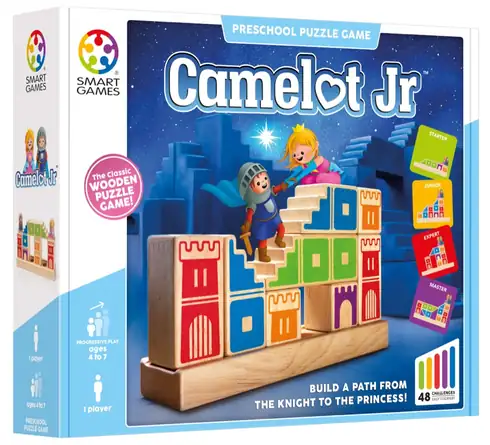
Camelot Jr.
Bring the knight and the princess together: a solo logic game with challenges of increasing difficulty.
At four, many children want to join in with real games: rolling the dice, turning over cards, moving playing pieces. Most of them already enjoy games with rules from around the age of three, but they only learn little by little to understand and follow the rules. This is exactly why board games are valuable at this age. They offer opportunities to practice the executive functions, which develop rapidly between the ages of three and five: impulse control (inhibition), working memory and cognitive flexibility. Children playing Halli Galli Circus, who may only ring the bell when they spot two matching clowns, practice holding back their first impulse. In memory games, players have to remember what is hiding where. Switching between rules is still hard: in tests, most children do not manage to swap a sorting rule they have just learned for a new one until they are four and a half to five.
The selection mixes several types of game: fast search and reaction games, stacking and dexterity games such as Animal Upon Animal, memory games and logic puzzles to solve alone such as Camelot Jr. With Orchard Game, there is also a cooperative game in which everyone wins or loses together.
When choosing, three things are worth looking at: few rules, short games (most games here take 10 to 20 minutes) and a task that challenges without overwhelming. At first, an adult usually needs to be at the table to explain and to help the child through runs of bad luck.
★ 4.2Bring the knight and the princess together: a solo logic game with challenges of increasing difficulty.
 ★ 4.2
Guessing taco, kitten or pizza and turning over the card: when a Candy card appears, everyone slaps the middle. A reaction game for children.
 ★ 4.2
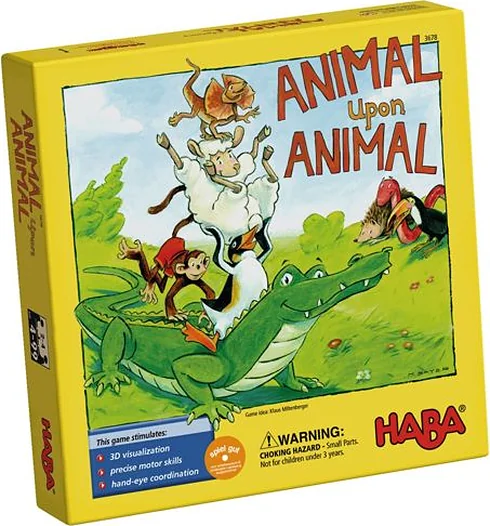
Crocodile carries sheep carries penguin: the classic stacking game for steady hands and a good eye.
Ages 4+★ 4.2Crocodile carries sheep carries penguin: the classic stacking game for steady hands and a good eye.
Editors' pickAges 4+★ 4.2Bring the knight and the princess together: a solo logic game with challenges of increasing difficulty.
Editors' pickOnly hands may look: a game of touch in which everyone feels the bags at the same time for the wooden piece shown on the card.
Editors' pickTwo matching clowns? Hit the bell! The classic reaction game in a version without counting, from age 4.
Editors' pick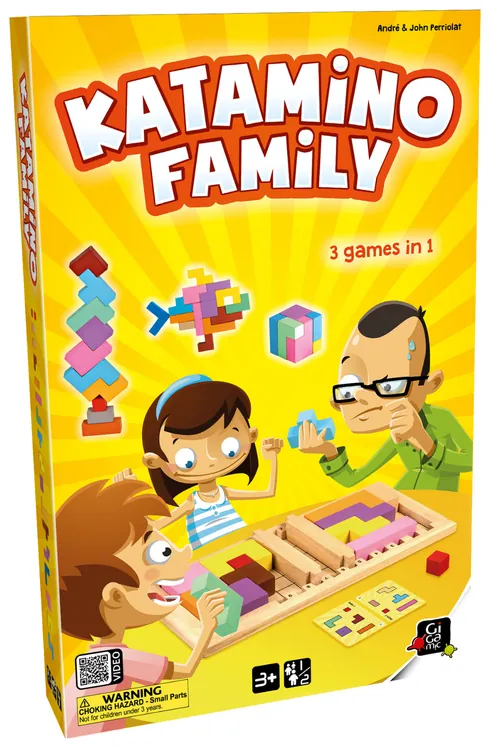 Ages 3+★ 4.2
Fit wooden blocks into the given area without leaving gaps: a versatile spatial puzzle game that grows with the player's skills.
Editors' pickMemorize a picture for ten seconds, then answer questions about it: a memory game in a pocket-sized box.
Editors' pickEveryone rummages through a wild heap of socks at the same time, looking for pairs: searching fun at high speed.
Editors' pickAges 4+★ 4.2Guessing taco, kitten or pizza and turning over the card: when a Candy card appears, everyone slaps the middle. A reaction game for children.
Editors' pick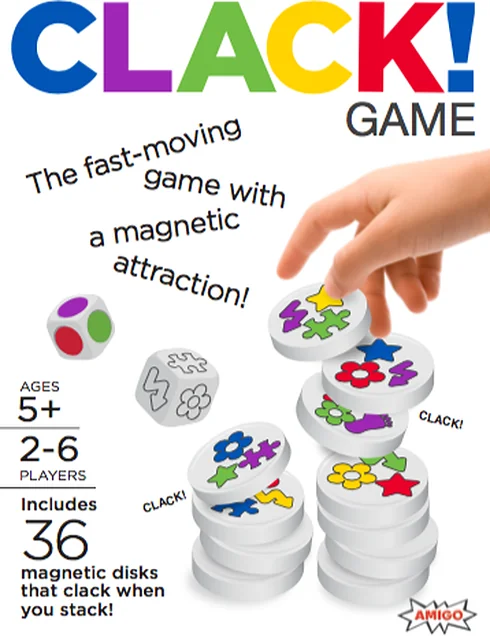 Ages 4+★ 4.2
After the dice are rolled, quickly collect the matching color and symbol discs, which stick to each other: a fast perception game.
 Ages 4+★ 4.0
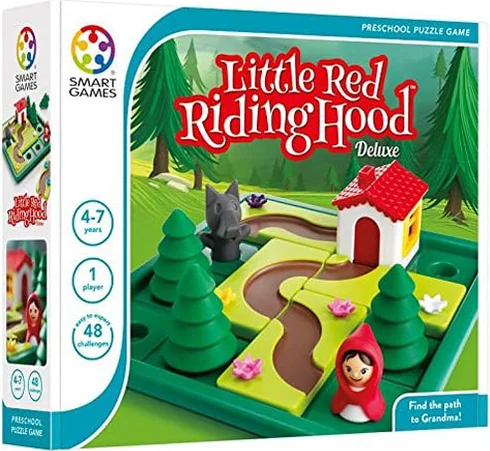
Lay path pieces so that Little Red Riding Hood reaches her grandmother safely: a charming solo logic game with progressively harder challenges.
 Ages 3+★ 3.8
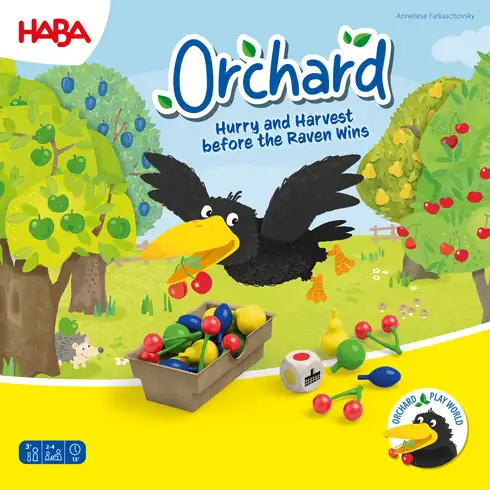
The cooperative classic for preschool children: harvest all the fruit together before the raven puzzle is complete.
Pull sticks out of the pile one at a time without moving any of the others: steady hands and patience in a timeless game of dexterity.
 Ages 3+★ 3.7
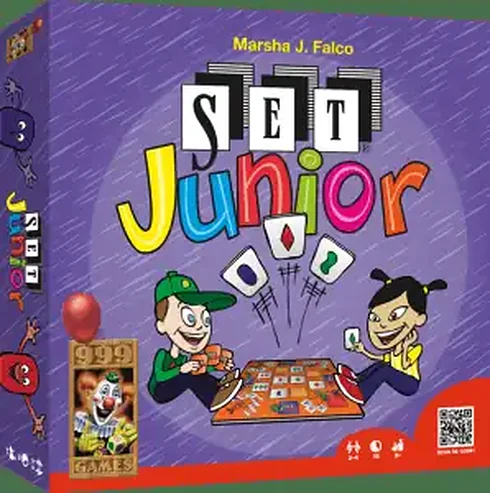
The beginners' version of the classic perception game: find matching tiles on the board. Pattern recognition from age 3.
 Ages 4+★ 4.0
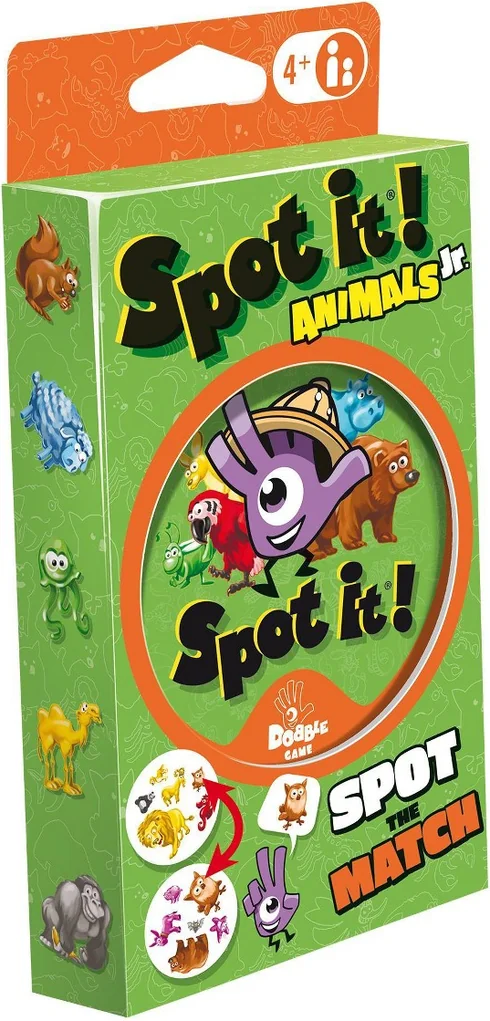
The simpler animal version of the classic symbol game: spotting the same animal on two cards. An ideal first quick-recognition game from age 4.
This page is based on the publishers' recommended ages. It lists all the games in our selection that are recommended from age three or four, most of them from age 4 and a few already for younger children. Each game has its own review on our website, with a description of how it plays and a skills profile. The recommended age remains a guide: whether a game suits your child also depends on their patience, interests and experience of playing games.
Most children enjoy games with rules from around the age of three. But they only gradually learn to understand and follow the rules. If a four-year-old makes up their own rules, they are usually not trying to cheat: they simply have not fully understood the game yet. Games with a few clearly visible rules help, as does an adult who plays along and gives reminders. As the child gains experience, this support can be reduced step by step.
There is no fixed number of minutes; what matters is how long your child enjoys taking part. Most games in this selection take 10 to 20 minutes, Taco Kitten Pizza only 5, and logic puzzles such as Camelot Jr. can be interrupted at any time. Stop while it is still fun and play more often instead: with executive functions such as impulse control, repeated practice is what counts.
Yes. At this age, children do not yet need to know how to lose; they only learn that over time. In games with winners and losers, they sometimes also find it harder to stick to the rules. It helps if an adult plays along and supports them through runs of bad luck. Cooperative games such as Orchard Game, in which everyone plays together against the raven, are a good complement, as are short games after which the next chance comes straight away.
This is what developmental psychology calls the mental abilities we use to control our thinking and actions. Three are considered core: inhibition or impulse control (holding back a first impulse), working memory (keeping information in mind and working with it) and cognitive flexibility (adapting your thinking when something changes). They develop rapidly between the ages of three and five. Matching and sorting games with changing rules, as well as jigsaw puzzles, are considered good practice, provided they challenge without overwhelming.