How it plays
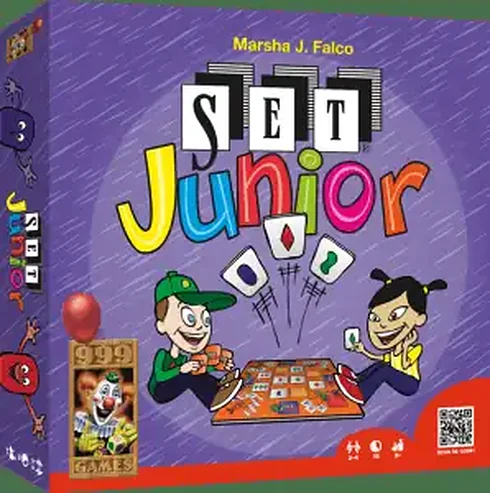
The 27 tiles show one to three ovals, diamonds or waves in three colors. On the beginners’ side of the board, players take turns placing one of their three tiles on the space with the same picture. Each row of three there is a “SET”; whoever completes one receives a chip. On the reverse, the search side, ten tiles lie face up. Everyone searches at the same time for three on which color, shape and number are each either all the same or all different. Whoever correctly calls “SET!” takes them. Whoever collects the most wins.
What it can help develop
The beginners’ side calls for careful looking: two red waves are not three red waves. The search side calls for pattern recognition under time pressure. Because two tiles determine the third unambiguously, players can work out the missing one in their heads and look for it specifically; this draws on working memory. The fact that “all the same” or “all different” can apply to each feature calls for cognitive flexibility. A false call can cost a SET already won: impulse control is needed.
Especially suitable for
- Children from age 3 who like comparing
- A stepping stone to the classic SET
- Family groups in which parents enjoy puzzling along
Less suitable for
- Children with red-green color blindness
- Families who own SET: its cards are enough for the search side
Our verdict
SET Junior is a worthwhile choice for children from age three who like comparing and for families in which adults also enjoy puzzling along. Its strength: two sides of the board, a simple placing game to start with and a search game as a simplified version of the original. Its limitations are the beginners’ side, which hardly conveys the SET principle, the luck factor and red-green color blindness.
Getting started
- On the beginners’ side, have the children briefly explain each completed SET: for which features are all three the same, and for which are they all different?
- At first, play the search side in turns rather than all at once; the rules provide this as a variant for learners.
- Explain the principle before moving on to the search side, since, according to one review, the beginners’ side does not convey it on its own.
In detail
Variants and player count
According to BoardGameGeek, SET Junior is by Marsha J. Falco, is a reimplementation of SET and was published in 2012 by Set Enterprises, AMIGO, Gigamic and 999 Games, among others. According to BoardGameGeek, the box of the German AMIGO edition from 2014 labels it a children’s game for ages 5 and up and calls it the game for little puzzlers. According to spieletest.at, the edition reviewed includes a three-part, double-sided board, 27 tiles and 24 point chips; each combination exists once. In the search variant, ten tiles lie face up, according to spieletest.at. According to cliquenabend.de, there is a variant for beginners and one for quick thinkers. The rules of the French Gigamic edition suggest a variant for learners in which players take turns instead of searching at the same time.
What reviewers say
The review on spieletest.at says that the advanced version offers the fun of the adult game in simplified form and is considerably more challenging. On the critical side, spieletest.at notes that the simple variant does not teach SET, that timing plays a part and that age 5 is at the lower limit for the search variant. According to spieletest.at, owners of SET could take the 27 cards with solid symbols and would have the same thing. The reviewer at cliquenabend.de liked the placing variant but liked the fast search variant less. According to cliquenabend.de, parents enjoyed the game and four-year-olds quickly got the hang of the steps, but the luck factor plays a not insignificant role.
How it compares
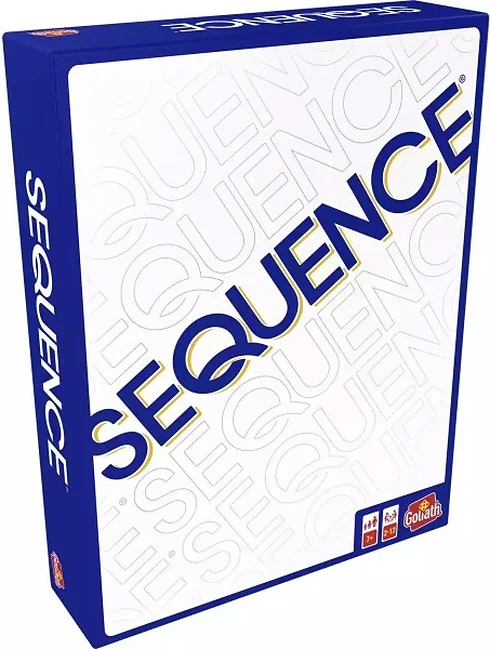
SET (from age 6, 1 to 8 people, about 20 minutes) shares the skill areas of flexibility, perception and speed as well as logic and planning with SET Junior. Sequence (from age 7, 2 to 12 people, about 30 minutes) shares the skill areas of flexibility as well as logic and planning with SET Junior. In Sequence, players ask themselves whether to extend their own row or block someone else’s. SET Junior suits children from age 3 who like comparing and works as a stepping stone to the classic SET; it is less suited to children with red-green color blindness.
Sources
Frequently asked questions
What age is SET Junior suitable for?
SET Junior is recommended from age 3. In one review’s test games, four-year-olds quickly got the hang of it; another review sees age 5 as the lower limit for the search side. For children with red-green color blindness, the game is difficult.
How long does a game take and how many people can play?
A game takes about 15 minutes. The game is for 2 to 4 people, who play against each other. On the beginners’ side, players take turns placing tiles; on the search side, everyone searches at the same time. Whoever has collected the most at the end wins.
What skills can SET Junior help develop?
SET Junior can help develop flexibility, perception and speed as well as logic and planning. Careful looking matters even when placing tiles, for example with two or three red waves. On the search side, for each feature, the three tiles are either all the same or all different.
Is SET Junior worthwhile if you already have SET?
According to one review, the 27 cards with solid symbols from SET are enough for the search side. The beginners’ side for placing tiles, on the other hand, is only available here, and it is suitable as a first introduction.