How it plays
The board shows every card twice, apart from the jacks; the corner spaces count for everyone. Taking turns, players discard a card from their hand, place a token on one of the two matching spaces and draw a new card. The aim is rows of five of their own tokens, diagonals included. Two-eyed jacks claim any free space, and one-eyed jacks remove an opponent’s token, though not from a completed row. Whoever completes two rows first wins; with three sides, one is enough. With four or more people, the game is played in teams.
What it can help develop
Every turn begins with a search: where on the 100 spaces is the card in hand shown, and which of the two spaces is free? This calls for telling rank and suit apart precisely. Then comes the decision: extend your own row or block the others’ row of four? This requires thinking ahead; if a player’s own row is blocked, a new plan is needed, and with it cognitive flexibility. Saving a jack for the right moment calls for impulse control.
Especially suitable for
- School-age children from age 7 who can read playing cards confidently
- Mixed family groups: in teams with four or more people
- Beginners looking for strategy without long rules
Less suitable for
- Players looking for depth: the luck of the draw often has a say
- Children who take it hard when they lose their own tokens
Our verdict
Sequence is a worthwhile choice for mixed family groups with school-age children who can recognize card values confidently, and for newcomers to strategy games who want to get by with just a few rules. Its strength: simple rules and an element of chance that puts young and old on an equal footing. Its limitations are the luck of the draw combined with little depth, and the longer wait in large groups.
Getting started
- Show the jacks beforehand: two-eyed jacks claim a free space, one-eyed jacks remove an opponent’s token, and completed rows cannot be touched.
- When playing in teams, agree before the start whether team members may consult each other, because otherwise the rules do not allow them to discuss their cards.
- At first, play with cards face up and think together about which space is worth more.
In detail
Variants and player count
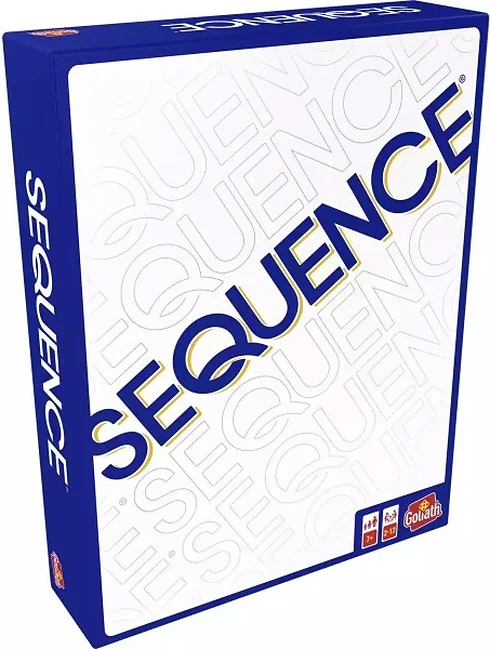
According to the Goliath rules (2024), 2 to 12 people from age 7 can play; the German publisher page lists “Sequence Classic” with 1 board, 104 cards and 135 tokens. Up to 3 people play individually; with more, they play in 2 or 3 teams, who according to the rules may not discuss their cards unless they agreed otherwise at the start. The aim is two sequences of five tokens each; with three players or teams, one is enough. According to Wikipedia, the designer is Doug Reuter; the first German-language edition was published by Parker in 1997, followed by one from Goliath in 2018.
What reviewers say
The Board Game Family finds Sequence simple and accessible to all ages because luck plays a part; with more players, the wait between turns gets longer. The website boardseyeview.net praises the simple, intuitive rules of the family game and criticizes the ban on consulting within a team. Cliquenabend calls the luck factor high and the strategic depth limited, but the game quick and entertaining. Spieletest.at considers the idea of the 2005 Parker edition good, if not new, and criticizes the fact that the game drags because nearly completed rows are sabotaged by removing tokens.
How it compares
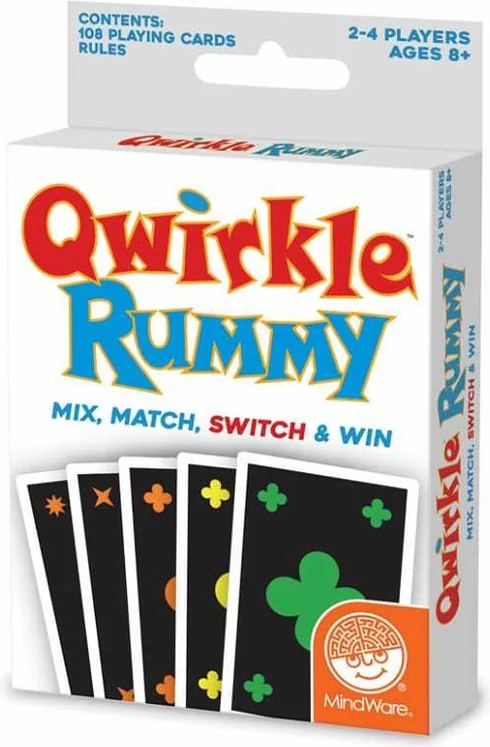
Nova Luna (from age 8, 1 to 4 people, about 30 minutes) has the same two skill areas as Sequence (from age 7, 2 to 12 people, about 30 minutes), namely flexibility as well as logic and planning. Qwirkle (from age 8, 2 to 4 people, 30 to 45 minutes) shares both and adds perception and speed. With up to 12 people, Sequence suits considerably larger groups than Nova Luna and Qwirkle, which are limited to four people. Sequence is less suited to children who take it hard when they lose their own tokens, Nova Luna to groups looking for laughter and conversation, and Qwirkle to puzzlers who dislike depending on the luck of the draw.
Sources
Frequently asked questions
What age is Sequence suitable for?
Sequence is recommended from age 7. A child who recognizes card values and suits confidently, finds the matching space on the board and can cope when an opponent removes one of their tokens is ready.
How long does a game take and how many people can play?
A game takes about 30 minutes, and the game is for 2 to 12 people. Up to 3 people play individually; with four or more, they play in two or three teams. Whoever first lays two rows of five tokens each wins; with three sides, one row is enough.
What skills can Sequence help develop?
Sequence can help develop flexibility as well as logic and planning. Each card in hand matches two spaces; players weigh up whether to extend their own row or slow down someone else’s. If someone else blocks a player’s row, that player has to plan again.
Is Sequence just a matter of luck?
The luck of the draw plays a big part, which one review criticizes. At the same time, the element of chance lets children and adults keep up with each other; the strategy lies in blocking rows and not playing jacks too hastily.