How it plays
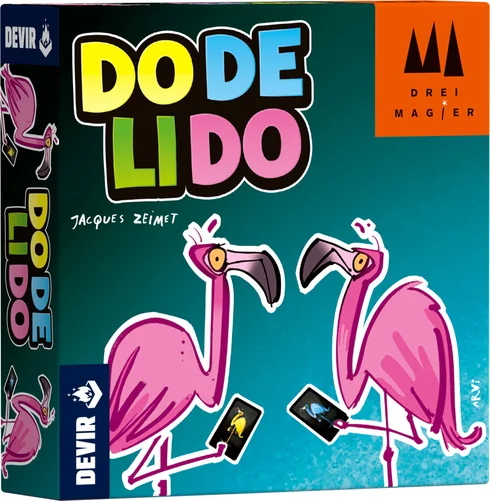
Everyone holds a face-down deck of animal cards in five colors. In turn, each player lays their top card on the next of the three discard piles and immediately calls out what predominates on the visible cards: an animal species or a color. A tie between animal species and color is called “Dodelido”, and no match “Nothing”. Each visible turtle requires an “Oh” before the call; when a crocodile appears, everyone slaps it. Whoever slaps last, stammers, makes a mistake or hesitates for more than three seconds takes all the cards on the table. The first player with no cards left wins.
What it can help develop
Several thinking steps take place within three seconds: taking in three cards, counting animals and colors separately, comparing both majorities and speaking the result fluently. Which feature decides can change with every card: this calls for cognitive flexibility. At the same time, players have to resist the obvious answer: the new card catches the eye but never decides the majority on its own, and an “Oh” without a turtle is a mistake. Working memory holds the interim counts, and the crocodile demands reaction speed.
Especially suitable for
- Families who can laugh at mistakes
- Mixed groups: adults slip up just as much
- Quick children from age 8 who like speed
Less suitable for
- Children who falter under time pressure
- Groups looking for calm rather than hectic play
Our verdict
Dodelido is a worthwhile choice for families with quick children from age 8 who can laugh at their own blunders. Reviewers appreciate rules that are quick to explain and yet demanding, and adults stumble just as much as children. Its limitations are the many exceptions, the hectic pace and, according to one review, an appeal that wears off with frequent play.
Getting started
- For more of a challenge, bring in the crocodile as soon as the rules for animal, color and turtle have sunk in.
- Make sure the table is well lit: in the edition reviewed, white and yellow look similar in poor light.
In detail
Variants and player count
According to the rules from Schmidt, the German edition reviewed has 105 cards, including 5 crocodiles. Each player holds a face-down pile and plays in turn onto three discard piles. Players announce whether an animal species or a color predominates; a tie between the two is called “Dodelido”, and no match “Nothing”. Each visible turtle adds an “Oh” before the call, and an “Oh” without a turtle is a mistake. When a crocodile appears, everyone slaps it, and the slowest player takes the cards. Mistakes are a wrong word, stammering or hesitating for more than three seconds; an empty pile wins the game.
What reviewers say
According to Wikipedia, Dodelido is on the recommendation list for the Spiel des Jahres 2017 and took sixth place in the 2017 À la carte award. The review on spieletest.at calls the basic rules easy and the game demanding all the same, but criticizes that, in the edition reviewed, white and yellow are too similar in poor light. Reich der Spiele describes a family game in which younger players beat their parents in some rounds; in its view, several rules with exceptions quickly add up to a lot. Hall9000 mentions simple rules and a quick start but sees the appeal fading with frequent play.
How it compares
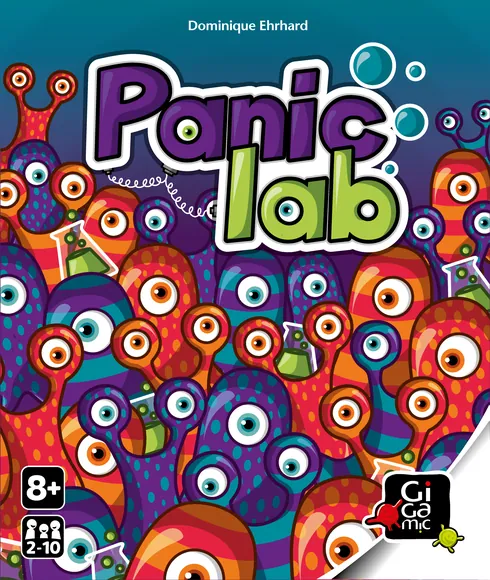
Panic Lab (from age 8, 2 to 10 people, about 20 minutes) shares the age and the skill areas of flexibility as well as perception and speed with Dodelido and adds memory instead of impulse control. It suits children who enjoy hidden-picture puzzles and large groups of up to ten people. Codenames (from age 10, 4 to 8 people, about 15 minutes) shares the playing time and the skill area of flexibility with Dodelido. Codenames, however, focuses on language and cooperation and is aimed at teenagers and adults who love words. Dodelido (from age 8, 2 to 6 people, about 15 minutes) suits quick children from age 8 and mixed groups in which adults slip up just as much. Children who falter under time pressure and groups looking for calm rather than hectic play are less well served here.
Sources
- Schmidt Spiele: Dodelido rules (PDF, in German, French, Italian and English)
- Gigamic: Dodelido (publisher’s page, in French)
- Wikipedia (German): Spiel des Jahres – Empfehlungsliste
- Wikipedia (German): À-la-carte-Kartenspielpreis
- spieletest.at: review (in German)
- Reich der Spiele: review (in German)
- Hall9000: review (in German)
Frequently asked questions
What age is Dodelido suitable for?
Dodelido is recommended from age 8. A good sign: the child stays calm when they trip over their words and likes speed. If the child falters under the three-second limit, or the group is looking for calm rather than hectic play, the game is not the best choice.
How long does a game take and how many people can play?
A game takes about 15 minutes. The game is for 2 to 6 people, who play against each other: whoever runs out of cards first wins. Mixed groups work well, because adults make mistakes too.
What skills can Dodelido help develop?
Dodelido calls for flexibility, impulse control as well as perception and speed. Within three seconds, animal species and colors have to be counted separately and the majorities compared, and the deciding feature can change with every card; an “Oh” is wrong without a visible turtle.
Are the rules hard to learn?
The basic rules are considered easy, but the exceptions for the turtle and the crocodile look like a lot at first glance. Reviewers describe the game as easy to explain but demanding.