How it plays
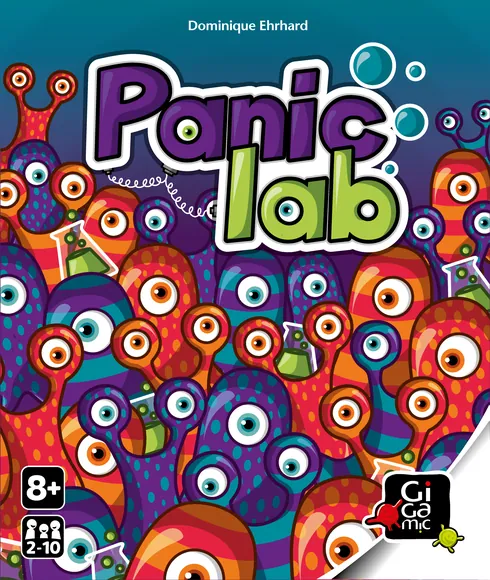
The game has 25 tiles laid out in a circle: 16 amoebas, three labs, three air vents and three mutation rooms. Three dice show the color, shape and pattern of the escaped amoeba, and the fourth shows which lab it fled from and in which direction. Everyone searches at the same time; what counts is the first matching amoeba in the direction of escape. A vent makes the search jump to the next vent, and a mutation room changes one feature. Whoever is first to touch the correct amoeba receives a token; the first to collect five tokens wins.
What it can help develop
It calls for visual search for three features at once, along a trail: every amoeba exists twice, and only the first one counts. After a mutation room, the dice no longer show the target: “red striped”, for example, becomes “red spotted”. Working memory has to hold this new target and adjust it at the next room; at vents, players have to switch in the middle of the search. Because mistakes cost a token, impulse control is also needed: hands off the amoeba that now matches only what the dice show.
Especially suitable for
- Children from age 8 who enjoy seek-and-find puzzles
- Fans of reaction games such as Ghost Blitz
- Large groups of up to ten people
Less suitable for
- Children who are quickly discouraged under time pressure
- Groups with very different levels of practice
Our verdict
Panic Lab is a worthwhile choice for families with children from age eight who enjoy search tasks and for groups of up to ten players. Its strength: the rules are quick to explain, and yet the game demands concentration under time pressure. Its limitations are the difficulty, which depends on the dice roll, and groups in which some players have much more practice than others.
Getting started
- Let younger players and newcomers start with the publisher’s variant without mutation rooms and vents. Add the mutation rooms next, and keep the vents for experienced players.
- Make clear beforehand that a wrong grab costs a token, provided the player already has one. This way, children get used to checking briefly before reaching out.
In detail
Variants and player count
According to BoardGameGeek, Panic Lab by Dominique Ehrhard was published by Gigamic in 2012; the publisher gives 2 to 10 people from age 8 and 10 to 30 minutes; its US distributor Hachette Boardgames gives about 20 minutes. According to the rules, the components include 25 tiles, 4 dice and 30 tokens. For getting started and for younger players, the rules mention a variant without mutation rooms and also without air vents. The publisher’s teaching material introduces the mutation rooms first and adds the vents for experienced players.
What reviewers say
Mensa in Germany nominated Panic Lab for the MinD-Spielepreis in 2024, in the short playing time category. The review on jeuxdenim.be calls the game quick to explain, small and easy to carry, and a real mental challenge; according to the review, the difficulty depends on the roll. A user comment there mentions occasional differences between players. The review on jedisjeux.net calls the difficulty very dependent on chance and less even from round to round than in comparable games.
How it compares
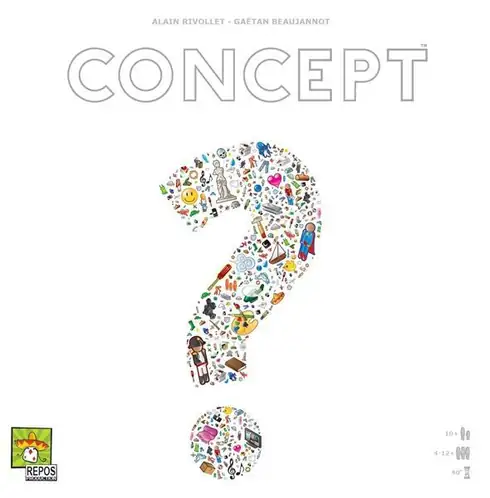
Ghost Blitz (from age 8, 2 to 8 people, about 20 minutes) shares the skill areas flexibility as well as perception and speed with Panic Lab. As a further area, Ghost Blitz has impulse control and Panic Lab has memory. Ghost Blitz is less suited to deliberate children who freeze under time pressure; Panic Lab is also less suited to children who are quickly discouraged under time pressure. Concept (from age 10, 4 to 12 people, about 40 minutes) shares flexibility with Panic Lab; in Concept, it is needed because a pictogram means different things depending on the word. Concept also has language and cooperation; it suits families who like puzzling without time pressure and can only be played with four or more people. Panic Lab, by contrast, is a race in which everyone searches at the same time, and it allows up to ten people.
Sources
Frequently asked questions
What age is Panic Lab suitable for?
Panic Lab is recommended from age 8. A child is usually ready when they enjoy scanning pictures for several features and stay calm even when things get hectic instead of grabbing too soon.
How long does a game take and how many people can play?
A game takes about 20 minutes. The game is for 2 to 10 people, who play against each other; everyone searches at the same time, and whoever is first to collect five tokens wins.
What skills can Panic Lab help develop?
Panic Lab can train flexibility, perception and speed as well as memory. After a mutation room, one feature of the amoeba being sought changes, for example the pattern. This new target has to stay in mind while the search continues.
What if a child gives up quickly under time pressure?
Some children quickly lose heart under time pressure; very different levels of practice within the group are also a limitation of the game. For beginners and younger children, the publisher provides a simpler variant without mutation rooms and vents.