How it plays
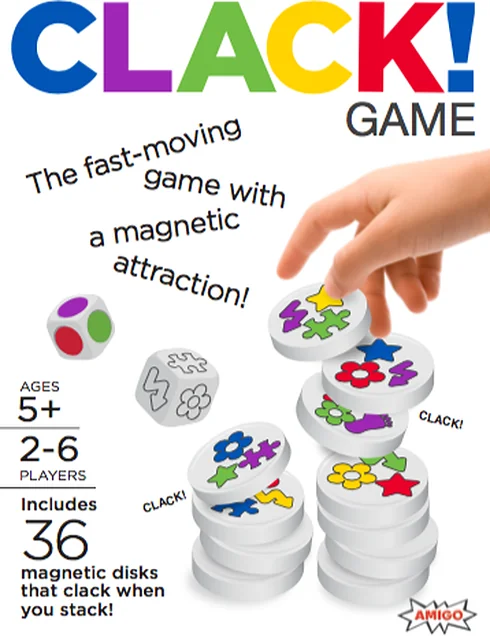
Round discs with several colored symbols are laid out face up. Two dice determine the target: a color and a symbol, such as a blue lightning bolt. Everyone grabs at the same time with one hand and clacks matching discs onto their stack; in the 2012 edition, magnets hold them together. Anyone who grabs a wrong one puts it back along with one of their own. If a die shows white, only the other one counts. The highest stack wins.
What it can help develop
Clack! calls above all for visual search under time pressure. Since each disc carries several colored symbols, looking for “blue” or “lightning bolt” is not enough: only the combination of both features counts, which calls for focused attention. If a disc has a blue star and a red lightning bolt, it lures the hasty hand into a trap; the penalty rule rewards a quick check. The target changes with every roll, and a white side cancels out one feature: this calls for cognitive flexibility.
Especially suitable for
- Children from age 4 who like grabbing quickly
- Short games for a spare moment
- Groups of children who want to play on their own
Less suitable for
- Children who find it hard to cope with losing at speed games
- Older school-age children who find speed games too simple
Our verdict
Clack! is a worthwhile choice for children from age 4 who enjoy grabbing quickly and for short games in a spare moment. The rules are straightforward and the components are considered sturdy; in 2012 it was on the Kinderspiel des Jahres recommendation list and was named children’s game of the year in Finland. Its limitations are the defeats in speed games that some children find hard to cope with, the jostling when several children play and the limited appeal for older school-age children.
Getting started
- Show the penalty rule beforehand: anyone who grabs a wrong disc puts it back along with one of their own.
- Explain the white side of the dice: if a die shows white, only the other die counts.
- Agree together that everyone grabs at the same time and with one hand only.
In detail
Variants and player count
According to AMIGO, two dice determine color and symbol, and players grab with one hand. According to the jury of the Spiel des Jahres (German game of the year award), one die shows a color and the other a star, flower or lightning bolt; in the 2012 edition, the magnetic discs make a “clack” sound when they meet. According to the rules (version 1.7), a player who takes a wrong disc puts it back as a penalty, along with one of their own. If a die shows white, only the other one counts, and the highest stack wins. According to the jury, the game was first published in German as “Klack” and has been called Clack! since 2019; in France, according to Gigamic, it is published as “Clac Clac” (Edition Amigo, distributed by Gigamic).
What reviewers say
For Clack!, the sources evaluated contain no independent review; they consist of contributions from publishers and the jury, the rules, lists of award winners and aggregated customer reviews. The Spiel des Jahres jury lists the game on the recommendation list for the Kinderspiel des Jahres (2012, according to the publisher’s page). In Finland, according to Superfred and the Finnish Wikipedia, Clack! received the Vuoden Lastenpeli, the children’s game of the year award, in 2012. On the publisher’s page, AMIGO quotes press comments from 2012: Ratgeberspiel.de calls the rules uncomplicated, and Gamesweplay.de calls the components sturdy and reports that four-year-olds at preschool played it without help from the staff. Aggregated customer reviews on testsieger.de mention as a frequent criticism that it can be challenging with several children.
How it compares
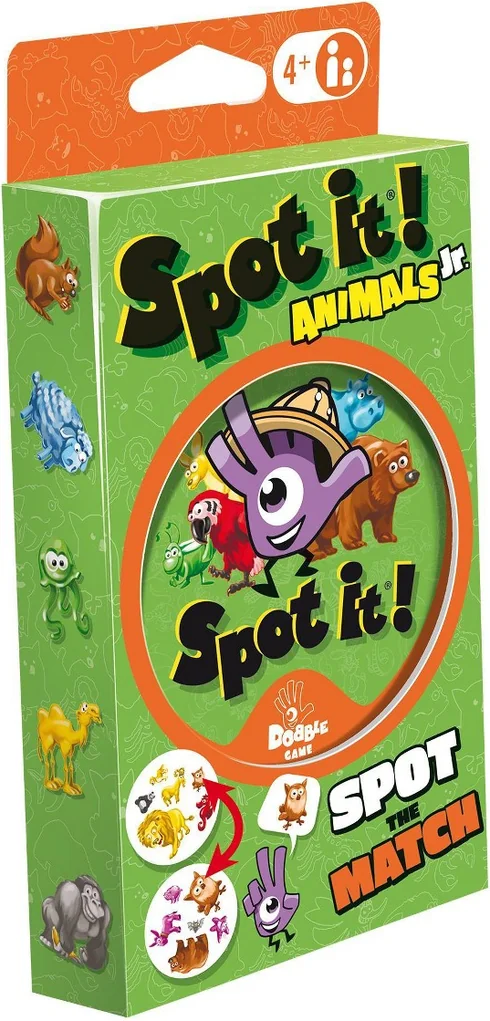
Spot it! Animals Jr. (from age 4, 2 to 5 people, about 10 minutes) has the same age, the same playing time and the same skill area, perception and speed, as Clack! (from age 4, 2 to 6 people, about 10 minutes). Clack! is less suited to children who find it hard to cope with losing at speed games. Socken Zocken (from age 4, 2 to 6 people, about 10 minutes) shares the age, player count and playing time as well as the skill area perception and speed with Clack! and also calls for impulse control. Socken Zocken is less suited to children who find it hard to cope with losing often, and to anyone looking for a calm game.
Sources
- AMIGO: Clack! (publisher’s page, in German)
- Spiel des Jahres: Klack (jury, in German)
- Gigamic: Clac Clac rules (version 1.7, in French)
- Gigamic: Clac Clac (publisher’s page, in French)
- Superfred: Vuoden Peli (award winners in Finland, in German)
- Wikipedia (Finnish): Vuoden peli
- testsieger.de: customer reviews (in German)
Frequently asked questions
What age is Clack! suitable for?
Clack! is recommended from age 4. A child is ready when they enjoy grabbing quickly and can cope with losing at speed games. According to one review quoted by the publisher, four-year-olds at preschool play it without help. Older school-age children often find speed games too simple.
How long does a game take and how many people can play?
A game takes about 10 minutes. The game is for 2 to 6 people, who play against each other at the same time, and the highest stack wins. Customer reviews describe it as sometimes challenging with several children.
What skills can Clack! help develop?
It can help develop perception and speed. Anyone looking for blue finds it on many discs, but only the combination with the symbol counts. A disc with a blue star and a red lightning bolt tempts the hasty hand; the penalty rule rewards a quick look.
Was Clack! previously called something else?
Yes. Until 2019, AMIGO’s German edition was called “Klack!”, and it has been called Clack! since then. In France, it is sold as “Clac Clac”. The name comes from the sound the magnetic discs make when they meet.