 ★ 4.2
Editors' pick
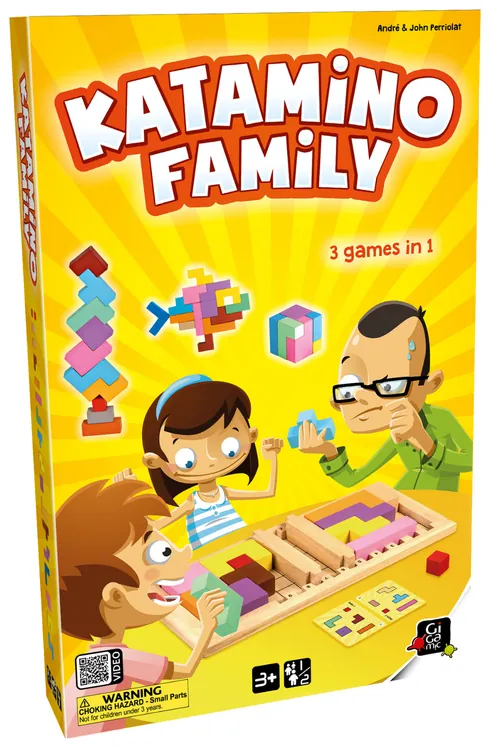
Katamino Family
Fit wooden blocks into the given area without leaving gaps: a versatile spatial puzzle game that grows with the player's skills.
Fine motor skills involve moving the hands and fingers in a targeted, finely coordinated way, together with the eyes: holding steady, controlling force, gripping small parts securely. Progress is rapid in the preschool years. At around three, children pick up small things with the fingertips of their thumb, index finger and middle finger. At around four, many hold a pencil between their first three fingers, and at five, they cut along a line with scissors. Development is not finished there: motor skills and thinking both mature over many years.
Dexterity games offer plenty of practice with instant feedback: the tower wobbles, the ball falls, the stick moves. In this selection, players stack (Animal Upon Animal, Jenga), pull carefully (Pick-Up Sticks, Keep It Steady), handle a magnetic wand, tweezers or test tubes (Bellz, Dr. Microbe, Dr. Eureka) and build from a model (Quick Cups, Make 'n' Break). Tile-laying and puzzle games such as Katamino Family or Tangram combine nimble fingers with spatial reasoning.
For the youngest, large pieces that are easy to grip matter: On the Farm Threading Game is recommended from 18 months; Orchard Game and Katamino Family are recommended from age 3, Animal Upon Animal and Pick-Up Sticks from age 4. Incidentally, the choking-hazard warning “Not for children under 3 yrs.” refers to dangers such as small parts that could be swallowed, not to tasks that are too difficult. Make 'n' Break, which is played under time pressure, is recommended from age 8. If your child becomes inaccurate under time pressure, play without a timer at first.
★ 4.2Fit wooden blocks into the given area without leaving gaps: a versatile spatial puzzle game that grows with the player's skills.
 ★ 4.2
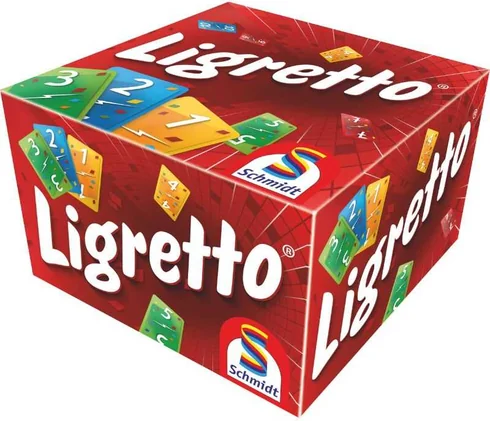
Everyone plays at the same time, laying cards in the middle at lightning speed: it takes speed, an overview of the table and nimble hands.
 ★ 4.2
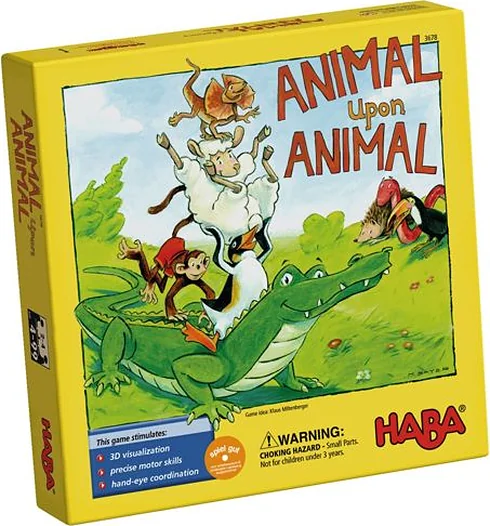
Crocodile carries sheep carries penguin: the classic stacking game for steady hands and a good eye.
Ages 4+★ 4.2Crocodile carries sheep carries penguin: the classic stacking game for steady hands and a good eye.
Editors' pick Ages 6+★ 3.7
Use the magnetic wand to fish out only your own bells: a delicate touch meets a careful weighing of risks.
Editors' pick Ages 6+★ 4.0
Move colored balls between test tubes until they match the formula, without touching them. Pace meets a delicate touch.
Editors' pickAges 3+★ 4.2Fit wooden blocks into the given area without leaving gaps: a versatile spatial puzzle game that grows with the player's skills.
Editors' pickAges 8+★ 4.2Everyone plays at the same time, laying cards in the middle at lightning speed: it takes speed, an overview of the table and nimble hands.
Editors' pickStack or line up five cups at lightning speed, as the card shows, then hit the bell!
Editors' pickArrange seven simple shapes so that they form the given silhouette: the timeless classic among shape puzzles.
Editors' pickArrange the twelve space creatures as the challenge shows so that all of them fit: a beginner-friendly solo logic game for children.
 Ages 6+★ 4.0
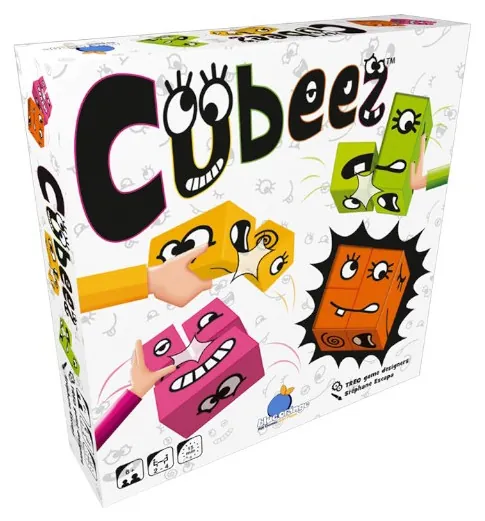
Turn your cubes in a flash until they show exactly the pattern on the card: a fast-paced game of perception and reaction.
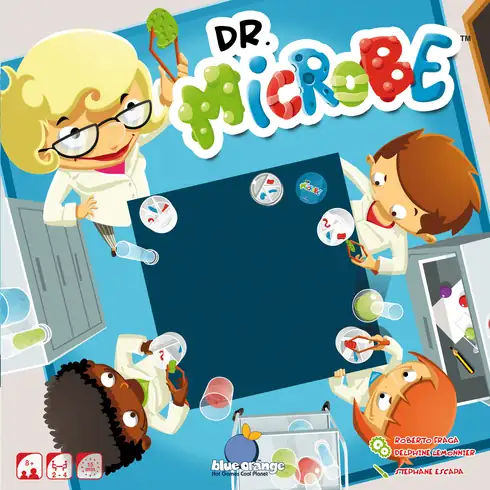 Ages 8+★ 3.7
Place microbes with tweezers at speed and work out what the challenge card does not show: logic, dexterity, a sharp eye and speed in one.
 Ages 8+★ 3.5
Build the track so that every marble lands in exactly the right base: a clever solo logic game with a touch of gravity.
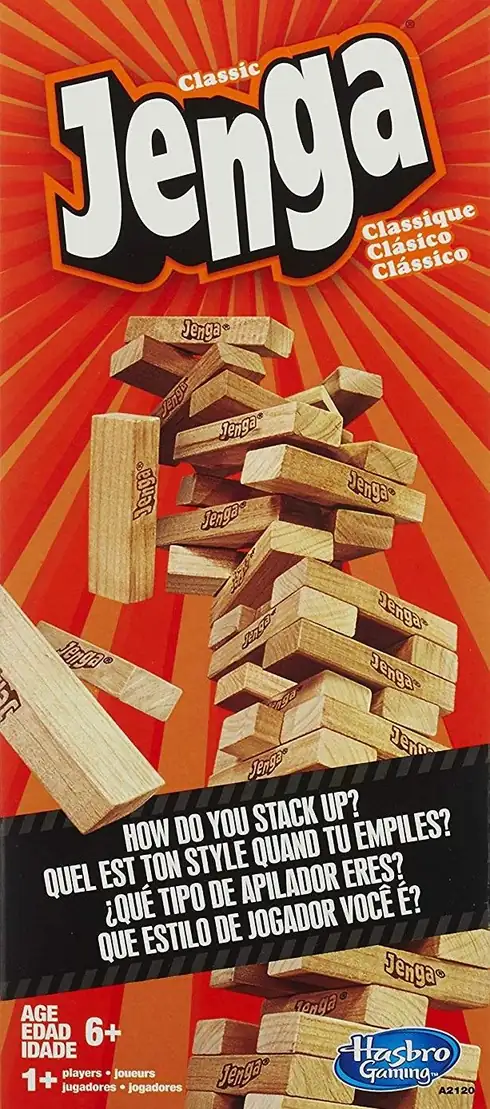 Ages 6+★ 4.3
Pull blocks out of the wobbly tower and place them on top until it topples: pure suspense and fine motor skills.
Pull sticks out of the wooden ring with a steady hand without letting it sink to the table: a game for a delicate touch and strong nerves.
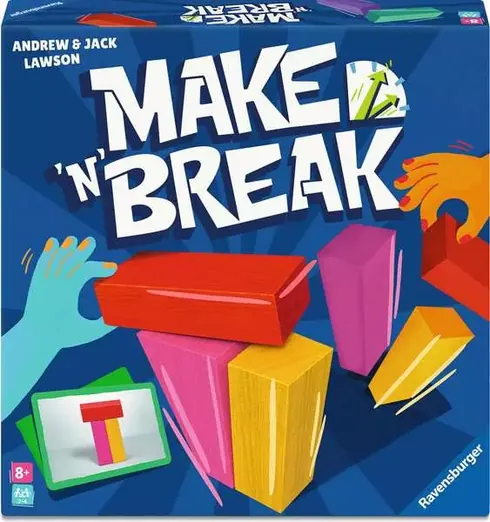 Ages 8+★ 3.9
In a race, stack building blocks exactly as the template shows: speed, steady hands and spatial visualization in one game.
 Ages 7+★ 4.1
Race to arrange your own blocks so that they match the pattern card exactly: a fast game of spatial perception.
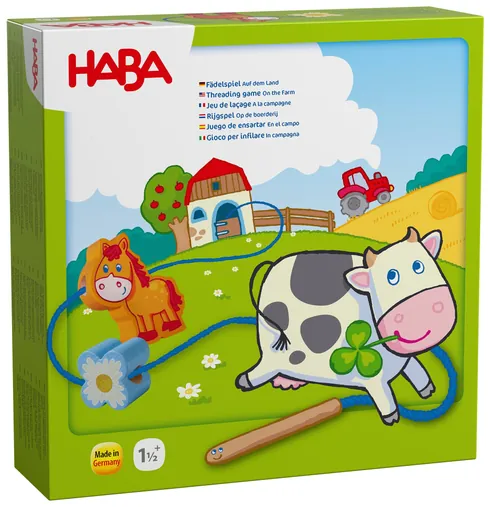 Ages 1½+★ 3.6
Thread wooden pieces onto a cord and make first patterns: this can help build fine motor skills and hand-eye coordination even in the very youngest.
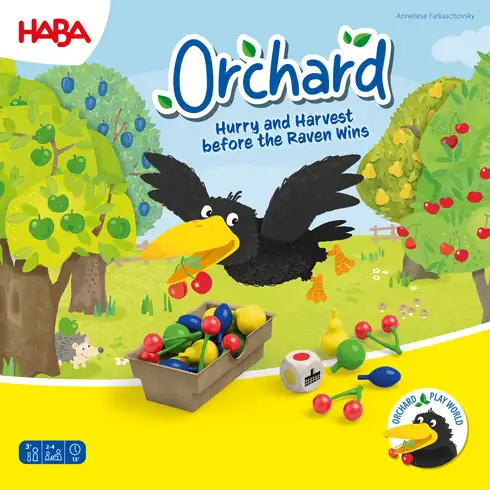 Ages 3+★ 3.8
The cooperative classic for preschool children: harvest all the fruit together before the raven puzzle is complete.
Pull sticks out of the pile one at a time without moving any of the others: steady hands and patience in a timeless game of dexterity.
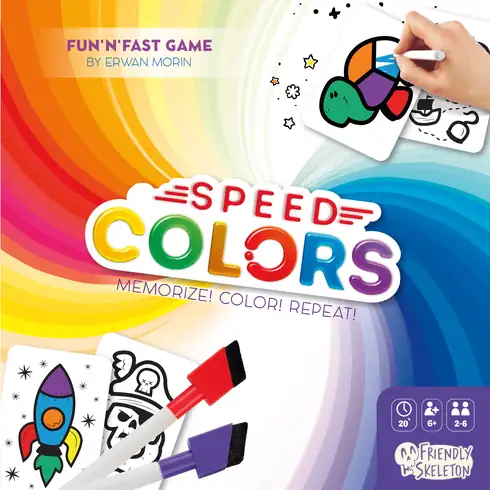 Ages 6+★ 4.2
Memorize a picture, then color it in correctly from memory as fast as possible: memory, speed and fine motor skills combined.
 Ages 14+★ 3.8
One blueprint, three roles: one sees it but may only gesture, another reads the gestures, a third builds blind. Only together does the structure take shape.
Here you will find all the games in our collection that we have assigned to the fine motor skills area, from On the Farm Threading Game, recommended from 18 months, up to games recommended from age 14. For most of them, fine motor skills come first in the skills profile; for a few, another area does. Each game has its own review on this website; the recommended ages come from the publishers.
It depends on the game: handling a tool such as the magnetic wand or tweezers in Bellz and Dr. Microbe, a steady hand and careful pulling in Pick-Up Sticks or Keep It Steady, and finely controlled force when stacking in Animal Upon Animal or Jenga. In Quick Cups or Make 'n' Break, players take in a model and turn it into hand movements; this calls for hand-eye coordination. Tile-laying and puzzle games such as Katamino Family or Tangram also require turning pieces in your head. The skills profile in each review shows what is in the foreground.
Expert bodies give rough guidelines. At around 3, children pick up small objects with the fingertips of their thumb, index finger and middle finger. At 4, they hold a pencil between the tips of their first three fingers, and at 5, they cut along a line with children's scissors. For three-year-olds, the American Academy of Pediatrics recommends activities such as threading large wooden beads, building with blocks and doing simple jigsaw puzzles; On the Farm Threading Game and Katamino Family call for similar hand movements. Every child develops at their own pace.
There is a link: in an analysis of several long-term studies, fine motor skills at school entry predicted later achievement in math and reading. In a study of 213 children, it was above all copying shapes from a model that was associated with better results in school tests. However, these studies do not show whether targeted practice with games improves school performance; what is cause and what is effect remains open.
First of all: children develop at different speeds in this area. Games in which everyone wins or loses together, such as Orchard Game, are helpful, as are speed games played without a timer at first. Adults can give themselves a handicap, for example by playing with their weaker hand. In stacking games such as Animal Upon Animal, a collapse often causes laughter rather than frustration. If your child seems much clumsier than other children of the same age when moving their hands and fingers, talk to your child's doctor.