How it plays
The 27 wooden sticks, in three colors and thicknesses, are pushed into a wooden ring and stood upright; given a slight twist, they fan out and the ring stays wedged horizontally. Taking turns, players roll a color and pull out a stick of that color: the thicker the stick, the more points it is worth (1 to 3). Everything may wobble; as soon as the ring touches the table, the game ends. Whoever drops it gets nothing, and among the others the highest points total wins.
What it can help develop
The focus is on fine motor skills: a stick is pulled out slowly and with controlled force; one jerk and the ring sinks. Spatial reasoning helps with the choice: which stick of the color rolled helps to hold up the ring, and which is just standing next to it? Impulse control comes in too: pausing when the structure moves instead of hastily grabbing again, and staying slow even as the tension rises.
Especially suitable for
- Children from age 6 who enjoy a thrill
- Mixed groups: children have a good chance of winning
- Short games for a spare moment, quick to explain
Less suitable for
- Fans of tactics: the die determines the color
- Children who dislike losing: dropping the ring costs all their points
Our verdict
Keep It Steady is a worthwhile choice for families with children from age 6 who enjoy a thrill and like to show that they have a steady hand. The high-quality wooden components and the growing tension make short games appealing, and children can keep up well against adults. Its limitations are that the choice of stick depends on the color die, that thin sticks can break and that whoever drops the ring goes away empty-handed.
Getting started
- Stand the sticks upright in the ring and fan them out with a slight twist so that the ring stays wedged horizontally.
- Say beforehand that wobbling is allowed: the game only ends when the ring touches the table.
- Handle the thinnest sticks carefully, because, according to one user comment, they break easily.
In detail
Variants and player count
According to Luding, the game was published by HABA in 2000 under the German title “Zitternix”; the designer is Heinz Meister. Luding lists the components as 1 ring, 1 color die and 27 sticks; according to BoardGameGeek, these are 27 wooden sticks in three colors and thicknesses in the wooden ring. According to Spielphase, players take turns rolling the die and pull out a stick of the color rolled; the sticks and the ring may move. The game ends as soon as the ring falls onto the table: whoever causes this gets no points, the others receive 1 to 3 points per stick depending on its thickness, and the highest score wins.
What reviewers say
The review on spieletest.at (2002) calls the game a successful improvement on the classic pick-up sticks and praises the attractive workmanship and the tension toward the end of the game; according to the review, it has a magical effect on children, who cannot get enough of it. Spielphase notes that adults do not get bored either. In BoardGameGeek user comments, the game is called an “advanced version of pickup sticks” with a lot of tension in a very short time; the very good components are also praised. In comments, the luck of the dice and unfair rolls are criticized; according to comments, children have a good chance of winning. Another comment notes that the thinnest sticks broke easily.
How it compares
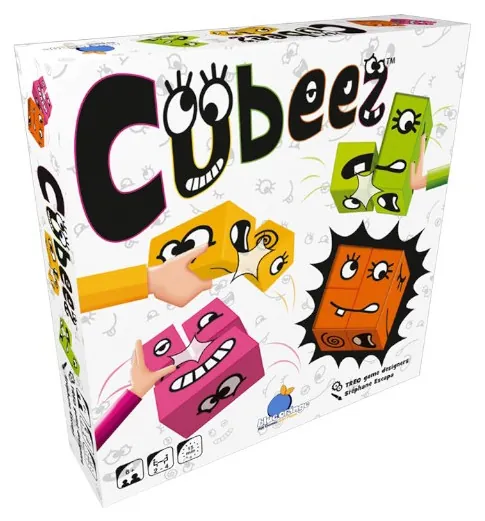
Keep It Steady (from age 6, 2 to 4 people, about 10 minutes) has the skill area of fine motor skills. Jenga (from age 6, 1 or more people, about 15 to 20 minutes), like Keep It Steady, calls for fine motor skills and also for impulse control. The catalog lists Jenga for children who like stacking and trying things out, and less for children who are sensitive to noise, because the collapse is loud. Cubeez (from age 6, 2 to 4 people, about 15 minutes), like Keep It Steady, calls for fine motor skills, plus logic and planning as well as perception and speed; it calls for spatial reasoning, processing speed and hand-eye coordination. According to the catalog, Cubeez is less suited to children who give up quickly under time pressure. In Keep It Steady, the die determines the color, and whoever drops the ring goes away empty-handed.
Sources
Frequently asked questions
What age is Keep It Steady suitable for?
The recommended minimum age is 6. Children who enjoy a thrill, have a steady hand and can cope with a falling ring costing all their points are ready. Anyone who dislikes losing finds it harder here.
How long does a game take and how many people can play?
A game takes about 10 minutes. The game is for 2 to 4 people, who play against each other. As soon as the ring touches the table, the game is over: whoever brings it down scores no points, and among the others the highest score wins.
What skills can Keep It Steady help develop?
It can help develop fine motor skills: a stick has to be pulled out gently, because even a firm pull makes the ring sink. Looking at the sticks that hold up the ring helps with this.
Do children stand a chance against adults?
Yes. One user comment mentions good chances of winning for children, and an older review notes that adults do not get bored either.