 ★ 4.4
Editors' pick
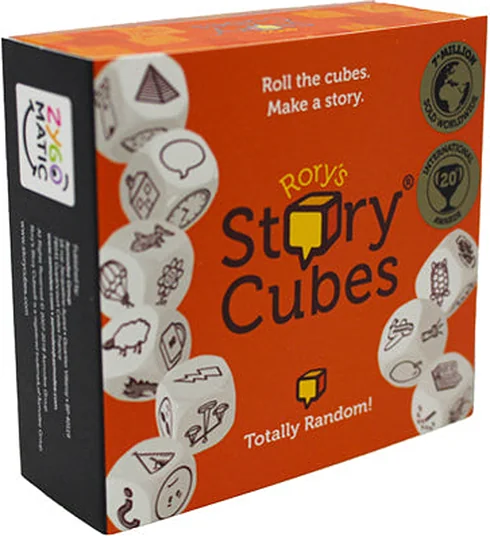
Rory's Story Cubes Classic
Nine picture dice, endless stories: a storytelling game with no winners or losers.
Language is more than vocabulary: children learn to listen and understand, to find words, to build sentences and to tell stories. A lot happens between the ages of three and six. Children get better and better at sentences with “because” or “if”, they start to talk about the past and the future, and by four or five, tenses and plurals are also more secure. Early stories often just string events together; with practice, they become more coherent. Then there is an ear for the sound of language: many children recognize syllables and rhymes before around age 6, while picking out individual sounds, such as the first sound of a word, is harder. This phonological awareness is regarded as an important foundation for learning to read and write.
Board games create exactly these opportunities to talk: whoever's turn it is has to name, describe or explain, while the others listen and respond. In a study with four- to six-year-olds, language skills were more strongly linked to the number of conversational turns with adults than to the number of words heard. Rory's Story Cubes Classic calls for free storytelling with no winner. In Taboo, Just One or Dixit, players have to describe things indirectly and judge what the others will understand.
When choosing, check whether reading is needed: picture card games work early, while Bananagrams or Scrabble require spelling. Word games played against the clock, such as Speedy Words, excite many children but can unsettle shy ones; a calm storytelling game is then the better way in.
★ 4.4Nine picture dice, endless stories: a storytelling game with no winners or losers.
 ★ 4.3
Everyone builds their own word grid at the same time: Scrabble without a board, but with speed instead.
 ★ 4.3
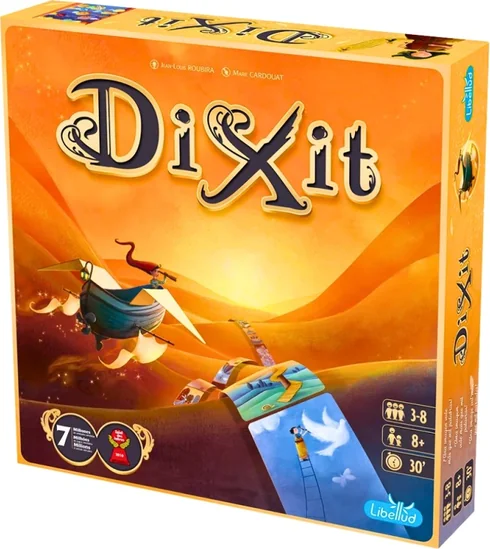
Dreamlike pictures, subtle clues: the game that calls for a feel for language and empathy at the same time.
Ages 7+★ 4.3Everyone builds their own word grid at the same time: Scrabble without a board, but with speed instead.
Editors' pickAges 8+★ 4.3Dreamlike pictures, subtle clues: the game that calls for a feel for language and empathy at the same time.
Editors' pickOnly hands may look: a game of touch in which everyone feels the bags at the same time for the wooden piece shown on the card.
Editors' pick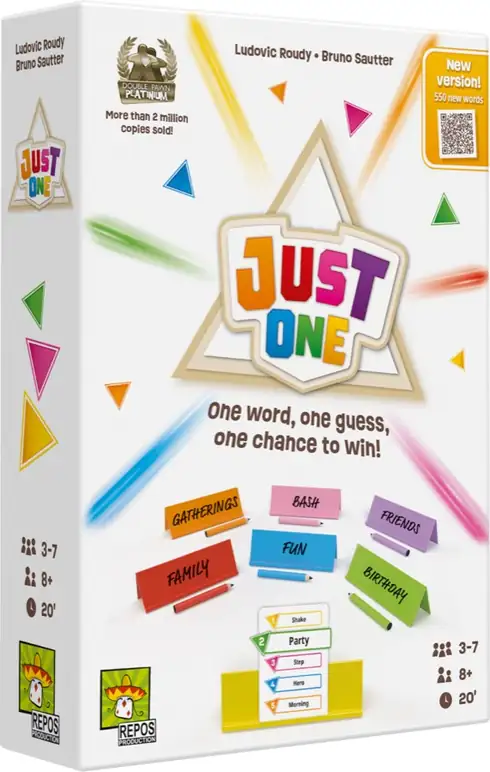 Ages 8+★ 4.1
Everyone writes a clue, and duplicates are crossed out: the most warm-hearted word game of recent years.
Editors' pick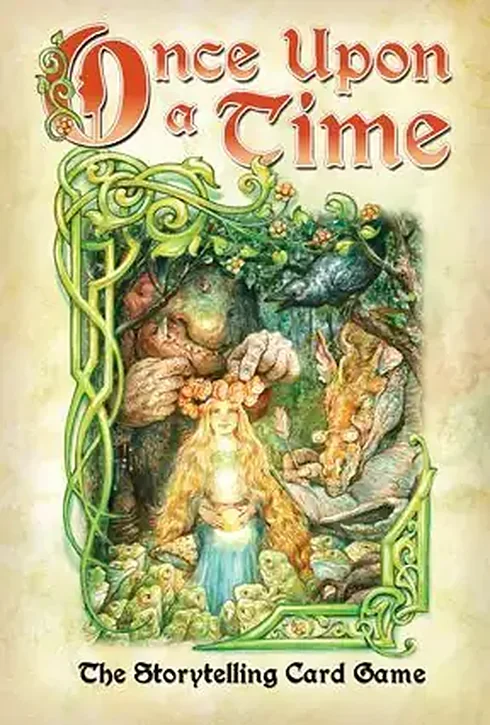 Ages 8+★ 3.9
Invent a fairy tale together and use story and ending cards to steer it cleverly to your own ending: an imaginative storytelling game.
Editors' pickAges 6+★ 4.4Nine picture dice, endless stories: a storytelling game with no winners or losers.
Editors' pick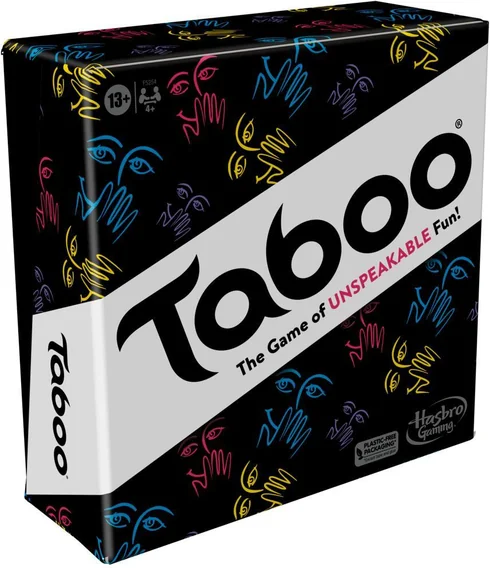 Ages 13+★ 4.1
Explain a term without using the five most obvious words: creative paraphrasing against the ticking clock, as a team.
Editors' pickGive three answers in just five seconds while the marble run ticks away: under pressure, even simple things become delightfully hard.
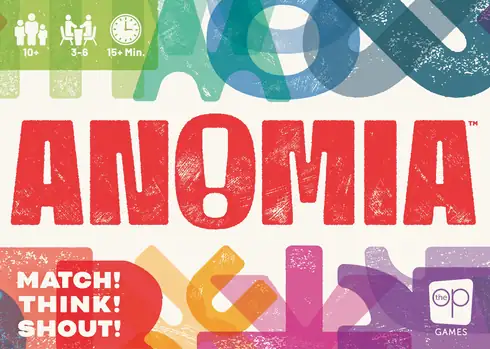 Ages 10+★ 4.0
When two symbols match, shout out an example for the other player's category at lightning speed and win their card: a fast-paced word-finding game for groups.
 Ages 10+★ 3.9
Two teams, a grid of words: get your team to guess as many of its own words as possible from a single clue word. Pure wordplay and association.
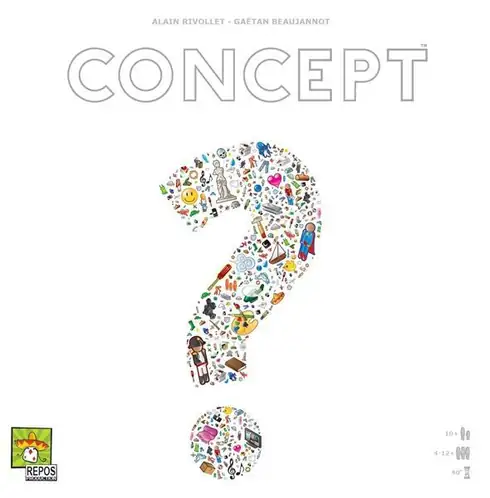 Ages 10+★ 3.9
Explain terms using only symbols on the board: no words at all, but plenty of deductive skill as a team.
Pass the ticking bomb on before it goes off: quickly name a word with the required letter group. Word finding under time pressure.
Forming words from letters and making clever use of the bonus squares: the vocabulary classic that can also train spelling and tactics along the way.
The classic word game with categories as a fast card game: find words for a letter and a category in a flash, vocabulary under time pressure.
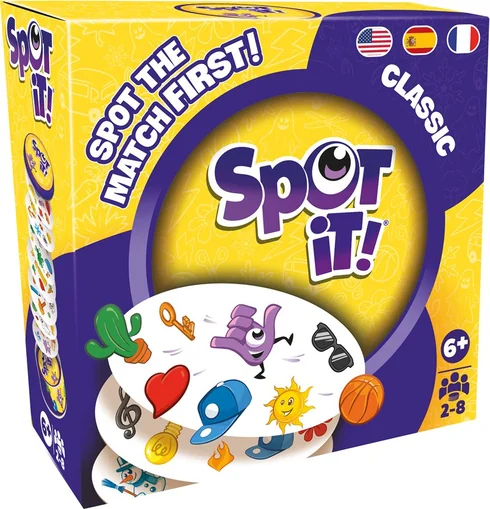 Ages 6+★ 4.0
Any two cards share exactly one symbol: whoever spots and names it first wins the card. Lightning-fast perception in a pocket-sized game.
Here you will find all the games in our collection that we have assigned to the language skill area, from a touch game from age 3 (Fiddle Faddle!) and picture games from age 6 to word games from age 13. Each of them has its own review on this website, with a description of how it plays and a skills profile. The recommended ages come from the publishers.
It means the ability to pay attention to the sound of words rather than just their meaning: clapping syllables, recognizing rhymes, picking out the first sound of a word. Syllables and rhymes often come as early as age 4 to 6, individual sounds usually only when children learn to read. Research regards it as an important predictor of reading and spelling; in studies, targeted practice improved both, most effectively in combination with letters. But it is only one building block.
Several. Fiddle Faddle! is recommended from age 3, and Rory's Story Cubes Classic and Spot It!, both recommended from age 6, work with pictures that are named or linked into stories. Bananagrams, Speedy Words, Scrabble and the classic Pass the Bomb, on the other hand, require knowledge of letters.
Ideally in the language in which you yourself feel most comfortable. Several languages do not confuse children or cause language delays; mixing words from both languages is part of learning. Specialist advice services emphasize that warmth and good language role models in the first language are the best basis for learning a second language. Games with pictures instead of text, such as Rory's Story Cubes Classic, Dixit or Spot It!, can be played in any family language, and you tell stories in your own language anyway.
Games create opportunities to talk, but they are no substitute for an assessment. If you have the impression that your child speaks much less than other children of the same age or is much harder to understand, talk to your child's doctor. The earlier difficulties are recognized, the better a child can be supported. Unclear pronunciation can also be caused by hearing problems. When playing, do not correct mistakes by making your child say it again correctly; instead, casually repeat what they said in the correct form, and do not push your child to talk.