How it plays
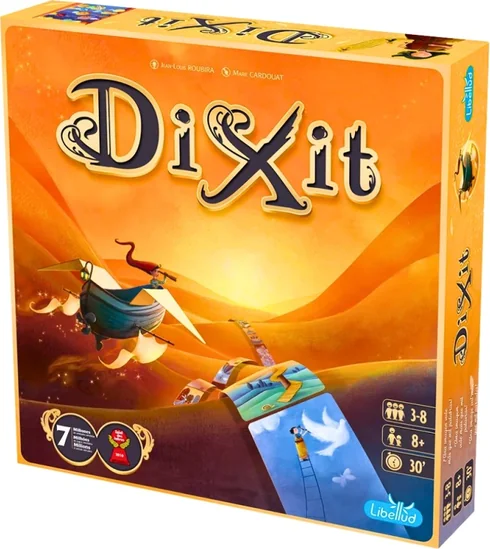
Everyone holds six picture cards with dreamlike illustrations. Taking turns, one player acts as the storyteller and gives a clue about one of them: a word, a song title, even a sound. The others each add a matching card face down. The cards are then shuffled and revealed, and everyone secretly guesses: which one is the storyteller’s card? If everyone or no one finds it, the storyteller scores nothing; otherwise the storyteller and everyone who guessed correctly score points. Whoever lures others to their own card earns bonus points. Once someone reaches 30 points, whoever is in the lead wins.
What it can help develop
The focus is on perspective-taking: the clue should put some players on the right track, but not all of them; the storyteller has to judge how the others think. When guessing, it works the other way round: what does this storyteller mean by “homesickness”? Added to this are word retrieval and association, all the way to metaphor. Cognitive flexibility is needed because every picture carries several meanings and decoy cards call the first impression into question. And impulse control: the most obvious clue is no use.
Especially suitable for
- Imaginative children from age 8 who like telling stories
- Groups spanning generations: adults have hardly any advantage
- Quiet family evenings when everyone feels like talking
Less suitable for
- Children who need clear, correct answers
- Groups looking for fierce competition and tactics
Our verdict
Dixit is a worthwhile choice for family groups with imaginative children from age 8, in which adults have hardly any advantage and people enjoy telling stories. Its strength: large-format pictures, short rules and the conversations about the pictures; in 2010 it was named Spiel des Jahres. Its limitations are the 84 pictures, which soon become familiar in regular groups, and children who need clear answers.
Getting started
- With three players, each person receives seven cards in hand, and the players guessing each add two cards.
- Aim for the middle ground with the clue: if everyone or no one identifies the storyteller’s card, the storyteller scores nothing.
In detail
Variants and player count
The number of players depends on the edition: the first edition from 2008 was designed for 3 to 6 people, while the new edition from 2021 goes up to 8. The current Libellud edition contains eight voting wheels and eight wooden rabbits. According to the German rules, the clue may be a sentence of any length, made up or taken from poems, films and proverbs. The scoring shows why a clue that aims for the middle ground pays off: if everyone or no one finds the storyteller’s card, the storyteller scores nothing, and the others receive 2 points each. Otherwise, the storyteller and everyone who guessed correctly receive 3 points each. In addition, every vote that others place on a player’s own card earns a bonus point.
What reviewers say
In the vote for the Spiel des Jahres 2010, Dixit won out over the other nominees, Identik, “Fresko”, A la carte and “Im Wandel der Zeiten – Bronzezeit”. In the same year, Reich der Spiele praised the way the illustrations create atmosphere and the fun of the conversations about the pictures. At the same time, the review notes that scoring and competition become secondary and that the 84 cards have been played through after a few games. A hands-on test by inFranken.de with the 2021 edition observed that children shone with their wealth of ideas, while some adults seemed stiff at first. The illustrations, the communication and playing across generations are praised there.
How it compares
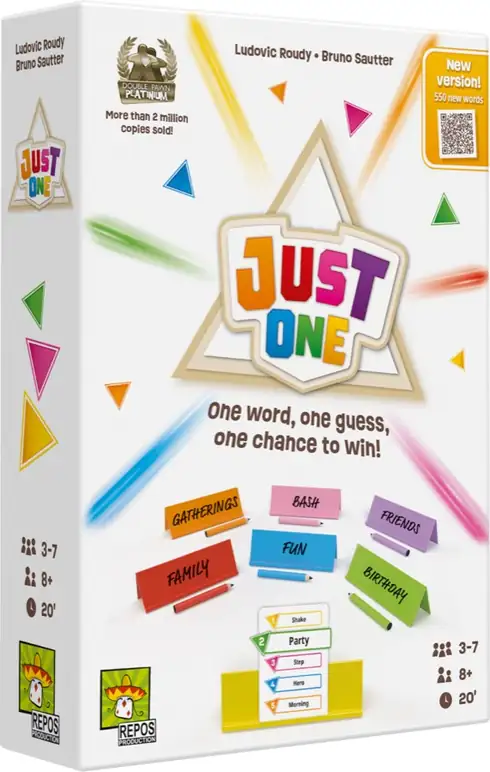
Just One (from age 8, 3 to 7 people, about 20 minutes) calls for vocabulary, association and perspective-taking, like Dixit. Everyone plays on one team, which suits children who dislike losing. Just One is less suited to children who still find reading and writing difficult. Pictures (from age 8, 3 to 5 people, about 30 minutes) shares imagination and perspective-taking with Dixit, but appeals to children who like building and tinkering, including reserved ones, because everyone builds at the same time. Dixit is the more likely choice for groups of up to eight and for quiet family evenings when everyone feels like talking.
Sources
Frequently asked questions
What age is Dixit suitable for?
Dixit is recommended from age 8. A child is ready when they like putting into words what a picture evokes in them and can cope with there being no clearly correct answer. Anyone who needs clear solutions will struggle.
How long does a game take and how many people can play?
A game takes about 30 minutes. The game is for 3 to 8 people: taking turns, one person tells something about a card and the others guess; play continues until someone has 30 points at the end of a round.
What skills can Dixit help develop?
It can help develop language and cooperation. The storyteller chooses a clue that some will guess but not all, and to do so judges what makes the others tick; whoever is guessing tries to work out what the storyteller had in mind.
Does Dixit get boring quickly?
In a regular group, the 84 pictures become familiar over time, and the appeal then fades. Expansions with another 84 cards help.