How it plays
Each player runs a tavern. In each of the eight rounds, everyone simultaneously turns over cards from their own deck until their tables are occupied. Then each player rolls four white dice, takes one and passes the dice coaster with the rest to the left until all the dice have been distributed. Dice with the right number serve guests and bring in thalers; ones and sixes provide beer. With these, players buy cards for their deck, recruit guests and upgrade their tavern; every upgrade brings a noble. Whoever has the most victory points on their cards wins.
What it can help develop
At its core is planning ahead: which upgrade pays off? An extra table, or a permanently employed server who only provides an extra die from the next round onwards? Cognitive flexibility is needed when the dice fall differently than hoped and the plan has to be reworked. On top of this comes constant arithmetic: adding up thalers and beer, subtracting costs and factoring in discounts.
Especially suitable for
- Older children and teenagers with gaming experience
- Two-player games: brisk, with hardly any downtime
- Children who enjoy planning, saving and building up
Less suitable for
- Players who like to optimize and are bothered by the luck of the dice
- Impatient children in four-player games with waiting times
Our verdict
The Taverns of Tiefenthal is a worthwhile choice for teenagers from age 12 with gaming experience who enjoy managing resources and expanding their tavern bit by bit, ideally with two players. Its strength: many different ways to improve your own tavern, and phases in which everyone plays at the same time; in 2019 it took second place in the Deutscher Spiele Preis. Its limitations are a heavy reliance on the luck of the dice, little interaction between players and possible slow stretches with four.
Getting started
- Make clear beforehand that a permanent server or an upgraded table only takes effect in the following round.
- Show early on that beer only comes from dice showing a one or a six; thalers and beer exist only virtually.
In detail
Variants and player count
According to Schmidt Spiele, The Taverns of Tiefenthal by Wolfgang Warsch is designed for 2 to 4 people from age 12 and comprises five modules. For less experienced players, the rules recommend starting with module 1 only. The game is played over eight rounds; in each round, cards are turned over until all the tables are occupied. Thalers and beer exist only virtually, and only dice showing a one or a six provide beer, on the beer delivery space.
What reviewers say
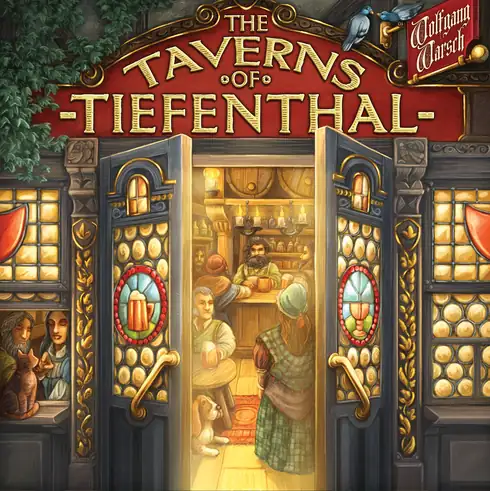
According to the history on spiel-essen.de, the game took second place in the Deutscher Spiele Preis 2019, behind “Flügelschlag”. According to a press release from the Hobbymesse fair, Dennis Lohausen received the Graf Ludo for the artwork in October 2019, in the category “Schönste Familienspielgrafik” (most beautiful family game artwork). Reich der Spiele finds the ways of upgrading appealing, the luck factor high and the interaction limited. According to the review, two-player games move briskly, four-player games drag, and the simultaneous phases cut down the waiting time. Meeple Mountain highlights the phases played simultaneously and mentions that the modules scale with the players’ experience and come in the box at no extra cost.
How it compares
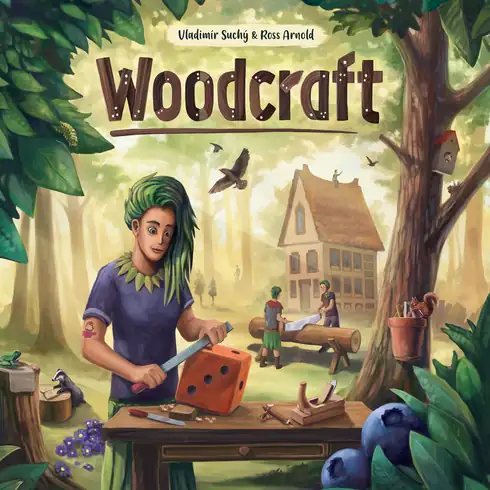
Woodcraft (from age 12, 1 to 4 people, about 80 to 150 minutes) has the same two skill areas as The Taverns of Tiefenthal, logic and planning as well as numbers and arithmetic. Like The Taverns of Tiefenthal, it calls for planning ahead and mental math. Woodcraft is less suited to beginners because, according to the publisher, it is an expert game. It is also less suited to impatient groups because of the pauses for thought and the low level of interaction. Targi (from age 12, 2 people, about 60 minutes) shares the skill area of logic and planning with The Taverns of Tiefenthal and also calls for planning ahead and cognitive flexibility. Targi is a duel for two; it is less suited to groups of three or more. The Taverns of Tiefenthal suits older children and teenagers with gaming experience and two-player games that move briskly with hardly any waiting. It is less suited to players who like to optimize and are bothered by the luck of the dice.
Sources
- Schmidt Spiele: Die Tavernen im Tiefen Thal (product page, in German)
- Schmidt Spiele: Die Tavernen im Tiefen Thal rules (PDF, in German)
- Spiel Essen: history of the Deutscher Spiele Preis (in German)
- Hobbymesse: press release on the Graf Ludo 2019 (in German)
- Reich der Spiele: review (in German)
- Meeple Mountain: review
Frequently asked questions
What age is The Taverns of Tiefenthal suitable for?
The Taverns of Tiefenthal is recommended from age 12. Players who keep track of thalers and beer and change their plan when the dice do not cooperate are ready. Anyone who dislikes leaving things to chance will enjoy it less.
How long does a game take and how many people can play?
A game takes about 60 minutes. The game is for 2 to 4 people, each of whom runs their own tavern; victory points decide at the end. With two it moves along quickly; with four it can easily drag.
What skills can The Taverns of Tiefenthal help develop?
It can help develop logic and planning as well as numbers and arithmetic. Whether another table or a permanent server is worth it needs to be thought through in advance; players are constantly adding, subtracting and offsetting.
Is there a simpler variant for beginners?
Yes, the rules contain five modules; less experienced players start with module 1. The modules adapt to the players’ experience and come in the box at no extra cost.