How it plays
Around the edge of a 5 × 5 grid of cards lie twelve fixed goods and action cards and four raid corners, with nine changing goods and tribe cards in the middle. Each round, the robber moves on by one space along the edge and blocks it; the two players take turns placing three Targi figures on the edge. Where the lines of two of a player’s own figures cross, that player also uses the card in the middle. With dates, salt, pepper and gold, players acquire tribe cards that bring victory points. The game ends as soon as someone has twelve tribe cards, or at the latest when the robber has gone all the way around the edge; the player with the most victory points wins.
What it can help develop
Targi calls for planning ahead with a twist: each figure casts an imaginary line, and the card in the middle is only available where two of a player’s own lines cross. Perspective-taking comes in too: each figure blocks the opposite space for the opponent. What does the opponent need, and what can I take away from them? Because the board changes every round, players have to keep adjusting their plans and keep in mind the tribe cards both players have laid out.
Especially suitable for
- Teenagers from age 12 who enjoy working out tactics
- Parent-and-teenager duels and couples on game night
- Patient planners who can stay focused for an hour
Less suitable for
- Groups of three or more people
- Players who dislike pondering or take being blocked personally
Our verdict
Targi is a worthwhile choice for teenagers from age 12 who enjoy tactics, for duels between parents and teenagers or for couples on game night. In 2012, the game won the À la carte award for card games, and the intersection mechanism keeps producing new dilemmas. Its limitations are the fixed line-up of two people, the hour of concentration, the scarce victory point tokens in the first edition and a touch of luck of the draw.
Getting started
- At first, lay out the edge cards front side up, with the text, and only later back side up, with the symbols.
- Before the first round, clarify the restrictions: corner spaces, the space blocked by the robber and the space opposite an opposing figure are off limits.
- At the start, trace the figures’ lines across the board with a finger until the crossing principle is clear.
In detail
Variants and player count
According to Kosmos, the components include 80 cards, 6 Targi figures, a robber and 15 victory point tokens, among other things. According to Wikipedia, Targi is the first published game by designer Andreas Steiger; the victory point markers of the second edition have the values 1, 3 and 5. According to Reich der Spiele, the edge cards can be laid out either with the labeled front or with the symbol back. According to Cliquenabend, the tribe cards lie in three rows of four; symbol bonuses bring 4 extra points for four identical symbols and 2 for four different ones.
What reviewers say
The jury of the Spiel des Jahres (German game of the year award) nominated Targi for the Kennerspiel des Jahres 2012; according to Wikipedia, the award went to Village. According to Fairplay, Targi won the À la carte award of Fairplay magazine in 2012, and according to Wikipedia it took sixth place in the Deutscher Spiele Preis 2012. The jury praises the intersection mechanism, which keeps presenting both players with dilemmas. Reich der Spiele calls the rules short and concise. Brettspiele-Report notes that players have to keep their own and their opponent’s tribe cards in mind, and criticizes too few victory point tokens. Cliquenabend mentions luck of the draw when cards are revealed and notes that the victory point tokens run out.
How it compares
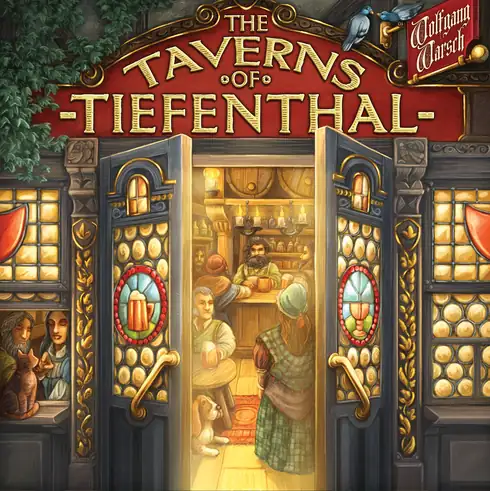
Jaipur (from age 12, 2 people, about 30 minutes), like Targi, calls for planning ahead and perspective-taking, plus weighing risks. Both belong to the skill area of logic and planning; anyone who finds luck of the draw hard to bear is less well served by Jaipur. The Taverns of Tiefenthal (from age 12, 2 to 4 people, about 60 minutes) can be played with four and, like Targi, calls for planning ahead and cognitive flexibility, plus mental math and therefore the area of numbers and arithmetic. The Taverns of Tiefenthal is less suited to optimizers who are bothered by luck of the dice. Targi suits teenagers from age 12 who enjoy working out tactics and parent-and-teenager duels. Targi is less suited to groups of three or more people and to players who dislike pondering or take being blocked personally.
Sources
- Kosmos: Targi (publisher’s page, in German)
- Spiel des Jahres: Targi (jury, in German)
- Wikipedia (German): Kennerspiel des Jahres
- Fairplay: À-la-carte-Kartenspielpreis (in German)
- Wikipedia (German): Deutscher Spiele Preis
- Wikipedia (German): Targi (Spiel)
- Brettspiele-Report: review (in German)
- Cliquenabend: review (in German)
- Reich der Spiele: review (in German)
Frequently asked questions
What age is Targi suitable for?
Targi is recommended from age 12. A teenager who likes planning tactically, can stay focused for an hour and does not take being blocked by the opponent personally is ready; anyone who dislikes pondering will enjoy it less.
How long does a game take and how many people can play?
A game takes about 60 minutes. The game is for exactly 2 people, who play against each other. It ends when someone has twelve tribe cards or after the robber has completed a full circuit, and the player with the most victory points wins.
What skills can Targi help develop?
Targi can help develop logic and planning. From each figure, an imaginary line runs across the board, and the card in the middle is only available where two of a player’s own lines cross. At the same time, players keep an eye on what the opponent needs.
Is Targi complicated?
The rules are short and concise, but the crossing principle, the restrictions on placement and the moving robber require attention in the first few games.