How it plays
In the edition reviewed, 48 sock cards (24 pairs) lie in a colorful heap around the sock monster. At the starting signal, everyone rummages through it at the same time, using only one hand, and puts the pairs they find in front of them. Whoever has five pairs first grabs the monster; then everyone checks together. If all the pairs match, that player receives a sock monster token. Once all eight tokens have been used up, whoever has the most wins. The edition sold in the USA contains a wooden sock monster, 13 clothespins and 48 socks; there, the winner of a round receives a clothespin, and the first player with three clothespins wins.
What it can help develop
Socken Zocken calls for visual search under difficult conditions. The child holds the image of a sock in mind as a search template and scans a jumbled, shifting heap in which cards cover each other and keep slipping. Every find calls for careful comparison under time pressure, because looking similar does not make a pair. Impulse control comes in too: anyone who grabs the monster before being sure that all their pairs match risks the round going to someone else. The professional variant of the edition reviewed also calls for cognitive flexibility, because each token turned over sets different search criteria.
Especially suitable for
- Children from age 4 who like searching and comparing
- Short games of about ten minutes
- Groups of siblings or children, up to six people
Less suitable for
- Children who find frequent losing hard to cope with
- Anyone looking for a quiet game
Our verdict
Socken Zocken is a worthwhile choice for children who enjoy searching and comparing, and for groups of siblings or children of up to six people. Its strengths are the games of about ten minutes and the simultaneous rummaging, which calls for looking closely. Its limitations are the noise at a full table and impatience when someone finds almost all the pairs.
Getting started
- Make clear beforehand that only one hand searches in the heap; the other stays behind the player’s back or under the table.
- After someone grabs the monster, check together: if the pairs are correct, they win the round; otherwise the round goes to the child with the most correct pairs.
- If your edition has the professional variant, save it for experienced sock hunters. There, the token turned over sets two search criteria, and each pair must meet at least one of them.
In detail
Variants and player count
According to HABA, the current edition of the game is intended for 2 to 6 people from age 4 and takes around 10 minutes; the designer is Michael Schacht. The contents include a sock monster, 8 sock monster tokens and 48 sock cards (24 pairs of socks). The edition HABA sells in the USA contains a wooden sock monster, 13 clothespins and 48 socks instead. According to the rules, the cards lie in a heap around the sock monster; at the starting signal, everyone rummages with one hand only, while the other stays behind their back or under the table. Whoever has five pairs first grabs the monster, and then everyone checks together. If all the pairs are correct, that player receives a token; otherwise it goes to the child with the most correct pairs (in the event of a tie, it goes back into the box). For experienced players, there is a professional variant: the token turned over sets two search criteria, and each pair must meet at least one of them.
What reviewers say
The original from 2004 (according to Wikipedia) and the card edition “Socken zocken – Das Kartenspiel” each received an award from the “spiel gut” association, according to the association. A review of the card edition on Reich der Spiele (2009) praises the short, snappy rounds and a challenge that should not be underestimated. Critically, the review notes that some players, children and adults alike, go beyond their frustration limit when one player finds almost everything; with the full number of players, it can get louder.
How it compares
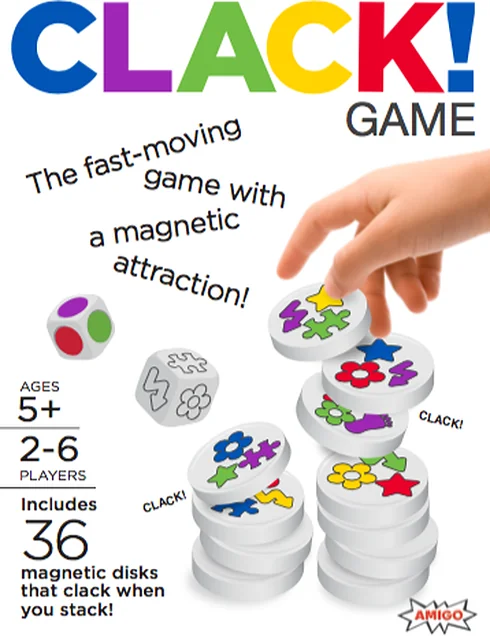
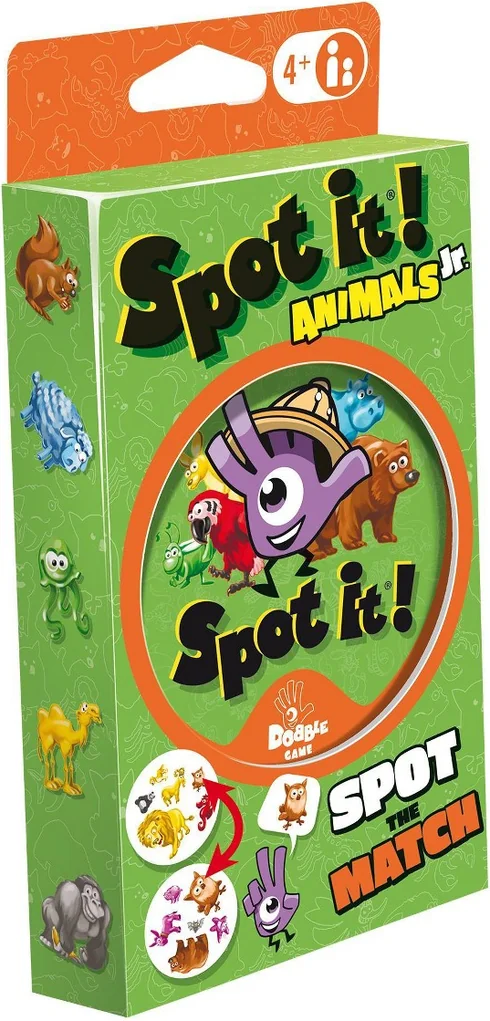
Spot it! Animals Jr. (from age 4, 2 to 5 people, about 10 minutes) shares with Socken Zocken the age, the playing time and the skill area of perception and speed. Like Socken Zocken, Spot it! Animals Jr. calls for visual search and processing speed. Spot it! Animals Jr. also calls for word retrieval, Socken Zocken for impulse control. Clack! (from age 4, 2 to 6 people, about 10 minutes) shares with Socken Zocken the age, the number of players, the playing time and the skill area of perception and speed; Socken Zocken also covers impulse control. Socken Zocken suits children from age 4 who like searching and comparing, and groups of siblings or children of up to six people. Anyone looking for a quiet game or finding frequent losing hard to cope with is less well served by Socken Zocken.
Sources
- HABA: Socken Zocken (publisher’s page, in German)
- HABA: Socken zocken rules, card game (PDF, multilingual)
- spiel gut: Socken zocken – Das Kartenspiel (award, in German)
- spiel gut: Socken zocken, original (award, in German)
- Wikipedia (German): Michael Schacht (Spieleautor)
- Reich der Spiele: review of the card edition, 2009 (in German)
Frequently asked questions
What age is Socken Zocken suitable for?
Socken Zocken is recommended from age 4. A child who likes comparing pictures and can cope with a round without winning is ready. Anyone who finds frequent losing hard to bear or wants a quiet game will enjoy it less.
How long does a game take and how many people can play?
A game takes about 10 minutes. The game is for 2 to 6 people, who play against each other, all searching at the same time with only one hand. In the edition reviewed, whoever has the most tokens at the end wins; in the edition sold in the USA, the first player with three clothespins wins.
What skills can Socken Zocken help develop?
Socken Zocken can help develop perception and speed as well as impulse control. The child keeps the image of a sock in mind and searches for it in the shifting heap. Anyone who grabs the monster too early risks the round going to someone else.
Is Socken Zocken noisy, and what helps with frustration?
With a full table it gets louder, and some players lose patience when one person finds almost everything. If children of very different ages are playing, a rule of your own that lets younger players grab earlier evens things out.