How it plays
Everyone receives five cups in different colors, and a bell stands in the middle. A challenge card shows, for example, birds one above the other in a tree or five houses in a row. Everyone builds at the same time: one above the other means stacking, side by side means lining up, sometimes in separate stacks. Whoever has finished slaps the bell. The card goes to whoever rings first and has built correctly; at the end, whoever has the most cards wins.
What it can help develop
The card is a picture, not a building plan: children look for the colored motifs and translate their positions into an arrangement of cups: top of the tree means top of the stack. This is visual-spatial processing at top speed; whoever has the card upside down in front of them has to rotate it in their head. Because the cups from the previous round stay where they are, the structure is constantly rebuilt: cognitive flexibility. The hands work quickly and precisely. A final check before ringing is worthwhile, because a mistake costs the card.
Especially suitable for
- Children from age 6 who like to build in a race
- Short games for a spare moment, including with adults
- Children who would rather get hands-on than brood
Less suitable for
- Noise-sensitive people: the cups rattle and the bell rings every round
- Children who freeze under time pressure
Our verdict
Quick Cups is a worthwhile choice for school-age children who like to get hands-on and for quick games on the side in which adults play too. The rule needs hardly any explanation, and racing to build livens up the group. Its limitations are the noise of cups and bell, the time pressure, ambiguous cards and, with only 24 cards, an appeal that fades quickly.
Getting started
- Before the game, agree together how to read cards on which it is unclear whether the motifs are side by side or one above the other, so that no argument arises.
- Check the cups briefly before ringing: if there is a mistake, the card goes to the next fastest person with a correct build.
- Explain that the structure from the last round stays where it is and that rebuilding is part of the game.
In detail
Variants and player count
According to the Amigo rules (version 2.0), the game by Haim Shafir is intended for 2 to 4 people from age 6. According to the publisher, the German box contains 20 plastic cups in five colors, 36 cards and a bell. According to the rules, each player builds with five cups in five colors, and everyone builds at the same time. According to the German Wikipedia, the base game was first published in 2013 with 24 challenge cards. The German publisher’s page now lists 36 cards; Quick Cups, the edition sold in the USA, has 24.
What reviewers say
The Kinderspiel des Jahres jury put the German edition on its recommendation list in 2014; in the same year, it received “Spiele Hit für Kinder” at the Austrian Spiel der Spiele. The jury’s text says that the game explains itself and trains dexterity, speed and perception. Hall9000 calls the game hectic; according to Hall9000, it is not always clear on the cards whether the motifs are side by side or one above the other, which can cause annoyance. Reich der Spiele writes that the game gets children moving and becomes loud, and that children turning the card that lies upside down in front of them can lead to arguments. Cliquenabend calls it a great reaction game for young and old but criticizes the mere 24 challenge cards of the edition at the time: over time, players know them, and beginners are at a disadvantage.
How it compares
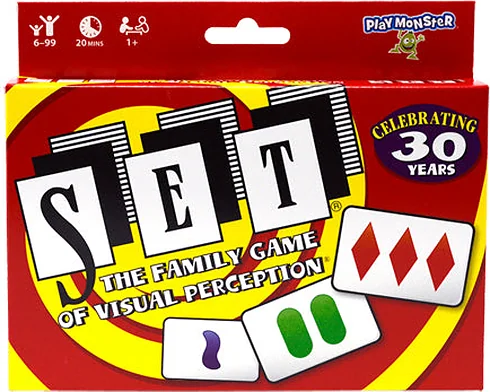
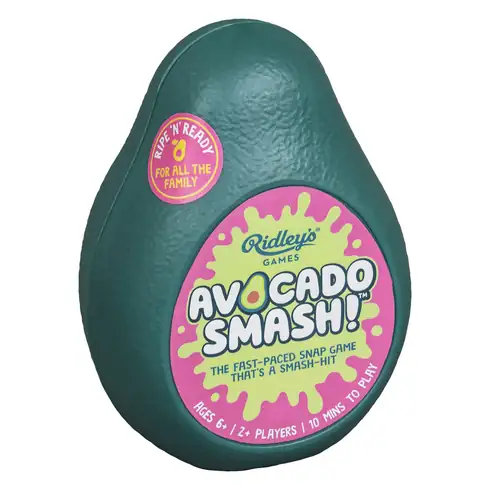
Spot It! (from age 6, 2 to 8 people, about 15 minutes), like Quick Cups, calls for perception and speed, there as visual searching and naming under time pressure. Spot It! is also suitable for short games in a spare moment with grandparents; children who quickly lose interest under time pressure are less well served there. Avocado Smash (from age 6, 2 or more people, about 10 minutes) also calls for perception and speed, plus impulse control as well as numbers and arithmetic. Like Quick Cups, Avocado Smash is less suitable for children who are sensitive to noise. Quick Cups, by contrast, also calls for fine motor skills and flexibility and suits children who would rather get hands-on than brood.
Sources
- Amigo: Speed Cups rules (PDF, in German)
- Amigo: Speed Cups (publisher’s page, in German)
- Spiel des Jahres: Speed Cups (in German)
- Wikipedia (German): Österreichischer Spielepreis – Preisträgerliste
- Wikipedia (German): Speed Cups
- Hall9000: review (in German)
- Reich der Spiele: review (in German)
- Cliquenabend: review (in German)
Frequently asked questions
What age is Quick Cups suitable for?
Quick Cups is recommended from age 6. A child who works out an arrangement of cups from the picture on a card and does not freeze under time pressure is ready; children who are sensitive to noise find the rattling and the bell harder.
How long does a game take and how many people can play?
A game takes about 15 minutes. The game is for 2 to 4 people, who play against each other at the same time, and whoever owns the most challenge cards at the end wins.
What skills can Quick Cups help develop?
Quick Cups can help develop perception and speed, fine motor skills and flexibility. The positions of the motifs are translated into an arrangement of cups, and because the structure from the last round stays where it is, it has to be rebuilt every time.
Is Quick Cups noisy?
Yes, the cups rattle and the bell rings with every card; reviews describe the game as hectic and loud. Anyone looking for quiet is not in the right place, but at about 15 minutes games are short.