How it plays
The small box contains 55 cards with everyday scenes (from the farm to the bedtime story), a ten-second sand timer and a die. The active player memorizes a picture while the sand runs through and then passes the card on. The die determines which question on the back is read out, for example whether both birds are blue. Whoever answers correctly keeps the card; otherwise it goes back into the box. After an agreed time, whoever has the most cards wins.
What it can help develop
The game mainly calls on visual short-term memory: ten seconds are not enough to take in everything, so attention has to be selective, and nobody knows which question will come. At first, younger children mainly remember the main subject; over time, they scan the whole picture: how many, what color, what is the biggest? Naming things often helps them remember. Answering means calling up the picture in their mind; it also takes careful listening and an understanding of words such as “both”.
Especially suitable for
- Children from age 4 who like to look closely
- Short games with an adult
- Playing on the go: small and easy to carry
Less suitable for
- Children who experience being quizzed as a test
- Children playing on their own: someone has to read out the questions
Our verdict
My First BrainBox is a worthwhile choice for children from age 4 who enjoy looking closely and for a few minutes of play for two with an adult. It was nominated for the Norwegian children’s game award in 2011 and is regarded as particularly simple and quick. Its limitations are that children who experience being quizzed as a test or get nervous because of the sand timer gain little from it. When children play on their own, someone also has to read out the questions.
Getting started
- Show the sequence with one card: look at the picture for ten seconds, pass it on, roll the die and have the matching question on the back read out.
- Explain that a correct answer wins the card, a wrong one sends it back into the box and every answer can be checked against the picture.
- Agree on the playing time beforehand, for example 5 or 10 minutes; after that, whoever has collected the most cards wins.
In detail
Variants and player count
There is no upper limit to the group: the Carletto range gives one or more players, and BoardGameGeek gives 1 to 8 people for “My First BrainBox”, the original 2008 edition. The picture side of the 55 cards has no text, and another person reads out the question on the back. According to Carletto, this is the box within the BrainBox range for the youngest players from age four, with questions about everyday life. One question, for example, asks which animal is the biggest, and besides the farm and the bedtime story, the cards also show sports and pets.
What reviewers say
In Norway, the edition “Brainbox: Mitt første” from Tactic was nominated in 2011 for the Norwegian children’s game award Årets barnespill. Brettspillguiden describes it as very simple and quick and as suitable for younger children. The parenting blog ET Speaks From Home reviews the edition “My First Pictures” and praises the simple questions as well as the plain, beautiful illustrations. The mother read out the questions herself.
How it compares
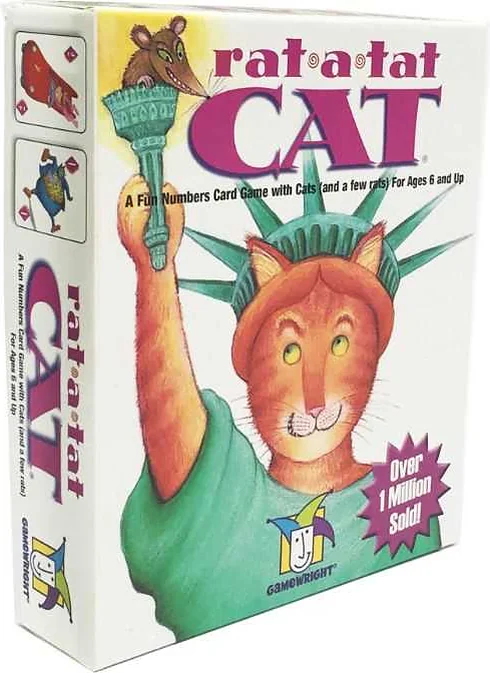
Rat-a-Tat Cat (from age 6, 2 to 6 people, about 20 minutes) shares the skill area of memory with My First BrainBox and adds numbers and arithmetic. Rat-a-Tat Cat is for 2 to 6 people, while My First BrainBox can also be played by one person. My First Stone Age (from age 5, 2 to 4 people, about 15 minutes) also covers memory and adds logic and planning, while My First BrainBox covers perception and speed. My First BrainBox suits short games between a child and an adult.
Sources
Frequently asked questions
What age is My First BrainBox suitable for?
My First BrainBox is recommended from age 4. A child is ready when they enjoy looking closely at everyday scenes and understand questions such as whether both birds are blue. Children who experience being quizzed as a test need more composure at first.
How long does a game take and how many people can play?
A game takes about 10 minutes; players agree beforehand how long to play. The game is for 1 or more people; because someone has to read out the questions, it works best with an adult.
What skills can My First BrainBox help develop?
The skills profile lists memory as well as perception and speed. In ten seconds, younger children first memorize the main subject; later, they take in the whole picture, for example how many things there are and what color they are.
Does the sand timer make children nervous?
It can happen: a mother reports on her blog that the sand timer made her children nervous, so she took it away. She still liked the pretty drawings.