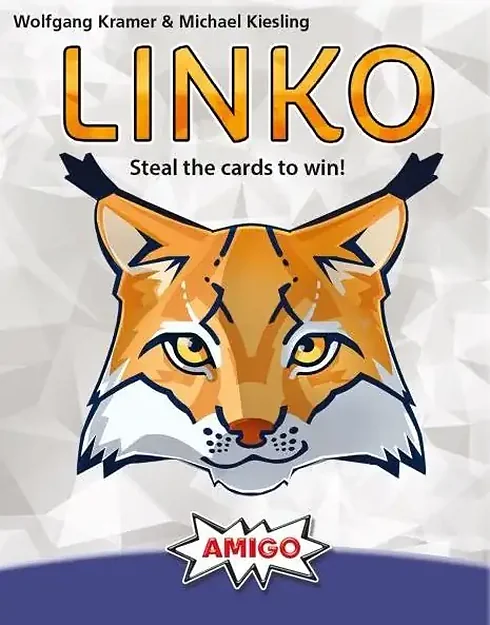
How it plays
Everyone receives 13 cards in hand, and six more lie face up as a supply. On their turn, a player lays out one card, or several cards of the same number, in front of them. They must snatch from every player whose top cards are equal in number but lower in value. The active player may take the snatched cards into their own hand; otherwise the affected player chooses either to take them back or to discard them and draw replacements. When someone has no cards left in hand, the game ends: each card laid out counts plus one and each card in hand minus one, whatever its number. The player with the most points wins.
What it can help develop
Weighing risks is central: do I play the two sevens straight away, or wait for a third so that they are harder to beat? A single low card can serve as bait: if it is snatched, a replacement may be drawn from the face-up supply. Impulse control is needed in the final stretch: anyone who greedily picks up other players’ cards when others are almost out collects negative points. Anyone who plans ahead has to adjust the plan constantly, because every turn changes the players’ displays.
Especially suitable for
- Children from age 10 who enjoy playing tactically
- Groups of three or more people
- Families who enjoy quick games
Less suitable for
- Children who take card stealing personally
- Two-player games: better with three or more people
Our verdict
Linko! is a worthwhile choice for tactically minded families with children from age 10, especially in groups of at least three people. In 2014 it received the Austrian Spiel der Spiele, first place in the À la carte award and the Essener Feder. Its limitations are that anyone who takes card stealing personally quickly gets annoyed, and reviews are more reserved about the game with two players.
Getting started
- Clarify the scoring first: each card laid out scores one point, each card in hand costs one, and the printed number does not matter.
- Show the bait tactic: a single low card can be left on display on purpose, because if it is snatched, the face-up supply provides replacements.
- Point out that several matching cards are harder to beat and so protect your display.
In detail
Variants and player count
According to Wikipedia, the game was first published as “Abluxxen” by Ravensburger in 2014 and has been published by Amigo since 2022. For its edition, Amigo lists 110 playing cards and artwork by Sergi Marcet. According to Amigo and the 2014 Ravensburger rules, each person receives 13 cards in hand, and six cards lie face up. According to the 2014 Ravensburger rules, at the end each card laid out counts plus one point and each card in hand minus one point; Amigo gives the same scoring.
What reviewers say
According to Wikipedia, the German edition, “Abluxxen”, won the Spiel der Spiele, the main prize of the Österreichischer Spielepreis (Austrian games award), in 2014. In the same year, it also won the À la carte award of Fairplay magazine and the Essener Feder for the best rules. Reich der Spiele calls it quick to explain and tactical, with a low luck factor and gloating. brettspiele-report.de calls the interaction very strong and describes the luck of the starting hand and of the draw as pure luck. Brettspielbox rates the level of interaction and the long-term fun as high and the 20 minutes as pleasantly short. According to Brettspielbox, it is a complete success from three, or rather four, people, but getting into it is not quite easy. spieletest.at sees a lot of potential for annoyance from card stealing; brettspielblog.ch, which reviews it under the title Linko!, writes that the game thrives on players annoying each other. Opinions differ on playing with two: Reich der Spiele says it works, while brettspielblog.ch finds it a little dull.
How it compares
Skull (from age 10, 3 to 6 people, about 15 to 30 minutes) shares the skill areas of impulse control as well as logic and planning with Linko! and also has cooperation. Like Linko!, Skull calls for weighing risks, as well as perspective-taking when reading bids, hesitation and facial expressions; Skull is less suited to children who dislike deceiving others, even in a game. The Fox in the Forest (from age 10, 2 people, about 30 minutes) has the same two skill areas, but is designed for two people. In The Fox in the Forest, the safe trick is tempting and easily leads to greed. Linko! suits children from age 10 who enjoy tactics, and groups of three or more people; it is less suited to children who take having their cards snatched personally.
Sources
- Ravensburger: rules (2014, copy on brettspielwelt.de, in German)
- Amigo: game details (in German)
- Wikipedia (German): Abluxxen
- Wikipedia (German): Österreichischer Spielepreis
- Brettspiele-Report: review (in German)
- Brettspielbox: review (in German)
- Reich der Spiele: review (in German)
- spieletest.at: review (in German)
- brettspielblog.ch: review (under the title “Linko!”, in German)
Frequently asked questions
What age is Linko! suitable for?
Linko! is recommended from age 10. A child is ready when they can compare the number and value of the top cards when laying out cards, and can accept others taking cards from them. Getting started seems a little complicated at first; according to one review, a practice game helps.
How long does a game take and how many people can play?
A game takes about 20 minutes and ends as soon as someone has no cards left in hand. The game is for 2 to 5 people, who play against each other, ideally three or more; it works with two, but reviews are then more reserved.
What skills can Linko! help develop?
The skills profile lists impulse control as well as logic and planning. For example, players have to weigh up whether to play two matching cards straight away or wait for a third, and resist greedily picking up other players’ cards in the final stretch.
What if a child takes card stealing personally?
The game thrives on players hindering each other, and reviews mention plenty of potential for annoyance. Children who take this personally are less well served here.