How it plays
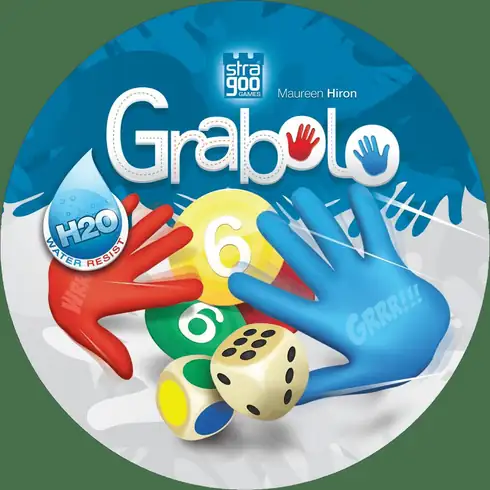
In the edition reviewed, the 36 round cards are laid out face up: the numbers 1 to 6 in six colors. Taking turns, one player rolls the color die and the number die, for example “blue 4”; everyone puts a hand on that card at the same time. The fastest hand takes it and keeps it face down. If the card has already been taken, players call out the name of the person they think has it; their own name is also allowed. A correct guess wins or secures the card; a wrong one costs the guesser one of their own cards. The first to have ten cards (with three players), eight (with four) or six (with five) wins.
What it can help develop
Every color and every number appears six times, so the card being searched for does not jump out: the eyes check two features at once. This is visual search under time pressure, where the fastest hand counts. With every card that is taken, the memory element grows: who took “red 2”, and has it changed hands since? Remembering and updating like this calls on working memory. Calling out a name without being sure can cost a card: speed and certainty have to be weighed against each other.
Especially suitable for
- School-age children from age 6 who love speed
- Groups of four or five: trickier
- Trips and outings: a small tin
Less suitable for
- Two players: it needs at least three people
- Children who do not cope well with hectic play and losing cards
Our verdict
Grabolo is a worthwhile choice for school-age children from age 6 who like speed, and for trips or outings: the rules are simple, there is no waiting and the tin is easy to take along. Its limitations are the minimum of three people as well as the hectic pace and losing cards; overall, the reviews remain restrained.
Getting started
- Lay out all the cards face up without overlapping.
- When calling out names, allow players to name themselves; a correct guess secures the card.
In detail
Variants and player count
The designer is Maureen Hiron; according to Luding, the first edition was published by stragoo (Essen 2012), and the Game Factory edition (Essen 2014) followed later. According to spielen.de, the Game Factory edition is for 3 to 5 people from age 6 and takes 10 to 15 minutes. According to Reich der Spiele, the edition reviewed includes a number die and a color die as well as 36 number cards from 1 to 6 in six colors. Brettspielblog and Hall9000 mention round cards in a tin in the editions they reviewed. According to Spieletest.at, which tested the stragoo edition, the memory element increases with the number of players.
What reviewers say
Reich der Spiele calls Grabolo a game for traveling and for bringing along as a small gift, with simple rules that let players start straight away. According to the review, it gets louder in large groups, which adds to the fun. Hall9000 describes a reaction game with a memory element that should not be underestimated, which is loud and turbulent in large groups and most fun there. Spieletest.at highlights that there is no waiting because everyone plays at the same time, and criticizes white numbers on a white background and brown and red on the color die in the stragoo edition.
How it compares
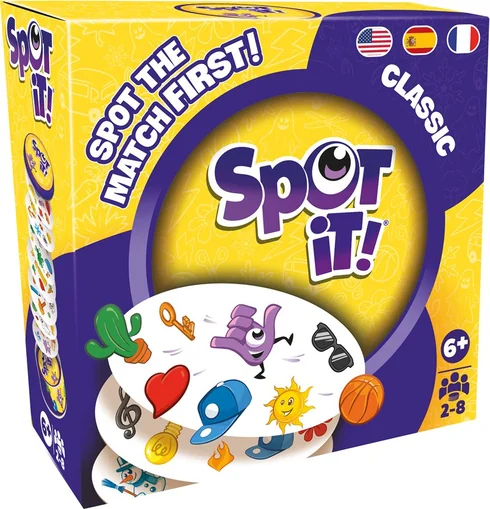
Quick Cups (from age 6, 2 to 4 people, about 15 minutes) shares perception and speed with Grabolo and adds fine motor skills and flexibility; everyone builds cups at the same time according to challenge cards and slaps the bell. Quick Cups suits children who like to build in a race, less so children who are sensitive to noise. Spot It! (from age 6, 2 to 8 people, about 15 minutes) shares the skill area of perception and speed with Grabolo, but combines it with language. Spot It! suits short games for a spare moment, but is less suited to children who quickly lose interest under time pressure. Grabolo (from age 6, 3 to 5 people, about 10 to 15 minutes) needs at least three people, is trickier with four or five and suits trips and outings. It is less suited to children who cope badly with hectic play and losing cards.
Sources
Frequently asked questions
What age is Grabolo suitable for?
Grabolo is recommended from age 6. A child who matches numbers and colors quickly and likes speed is ready. Anyone who does not take commotion and lost cards well will be less well served by it.
How long does a game take and how many people can play?
A game takes about 10 to 15 minutes, and the game is for 3 to 5 people, who play against each other; it does not work with two. The winner is whoever first has ten cards (with three players), eight (with four) or six (with five).
What skills can Grabolo help develop?
It can help develop perception and speed as well as memory. Players look for a card by color and number at the same time; the more cards have been taken, the more there is to remember: who took which one, and has it changed hands?
Is Grabolo noisy?
With more players, things get noisy and wild, which several reviews count as part of its appeal. For anyone who does not take commotion and lost cards well, however, it can quickly become too much.