How it plays
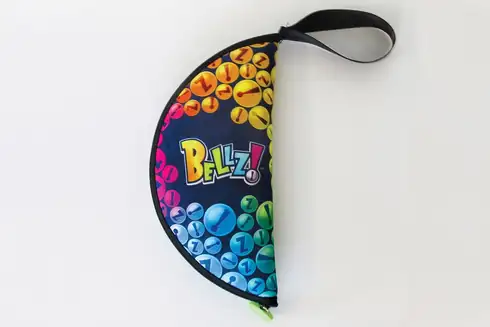
The opened zip-up pouch serves as the playing area for 40 metal bells in four colors and three sizes. Each player chooses a color. Before their turn, players choose one end of the wand: the narrow end pulls more weakly and is easier to control, while the wide end picks up whole clusters. As long as only their own bells are hanging from it, players may keep fishing or stop and keep their catch. If another player’s bell sticks or a bell falls out of the playing area, the whole catch from that turn goes back. The first player to have all ten bells of their color wins.
What it can help develop
The focus is on controlling movement: the closer the wand comes, the stronger it pulls, and anyone who dips in too deep picks up neighboring bells as well. The wand has to be moved slowly and steadily; every slip shows the hand how close it can go. Because the bells stick to each other, selective attention is needed beforehand: is someone else’s bell underneath? Weighing risks and impulse control come in too: strong or weak end of the wand, keep fishing or bank the catch, even though “just one more” is tempting?
Especially suitable for
- Children from age 6 who enjoy dexterity games
- Mixed groups with grandparents and grandchildren
- Short games for a spare moment and on trips
Less suitable for
- Households with toddlers: small parts that can be swallowed
- Children who find it hard to cope with setbacks
Our verdict
Bellz is suitable for children from age 6 who like dexterity games and for families spanning the generations who want a short game for a spare moment or on trips. The rules can be explained in just a few words, and children often ask for another game. Its limitations are that opinions are divided, some find it hard to control the magnetic pull, the bells are small parts and the game does not fill an evening.
Getting started
- Before each turn, decide which end of the wand to use, because it cannot be switched during the turn.
- Show how a turn ends: if another player’s bell sticks or a bell falls out of the playing area, the whole catch goes back; anyone who stops voluntarily keeps it.
- Check beforehand that everyone can easily tell the four bell colors apart.
In detail
Variants and player count
Bellz was published by Game Factory in 2015 for 2 to 4 people. In that edition, the opened zip-up pouch serves as the playing area for 40 metal bells in four colors: 20 small, 12 medium and 8 large. The wand has a large, stronger magnetic end and a small, weaker one, and players do not switch ends during a turn. In shops today, the 2020 Spin Master edition is often found; it replaces the pouch with a plastic tray that can be closed.
What reviewers say
Reich der Spiele calls Bellz ideal for traveling: children in particular cannot get enough of it. A reader’s comment there considers it unplayable, because even the weak magnet attracts whole clusters; a reply advises picking the bells rather than pulling them. Angespielt.de considers the magnet reasonably controllable and advises playing slowly with the weak end rather than getting too greedy. For the Spin Master edition, Spieletest.at recommends dry runs to get to know the ends of the wand and considers it unsuitable for shaky, nervous players. The Spielecafé der Generationen calls this edition suitable for all generations, as long as players’ fine motor skills are good enough, and notes that some find the colors hard to tell apart. Kinderzeit considers plenty of dexterity necessary, points out that some of the bells are very small and recommends Bellz only from age 8.
How it compares
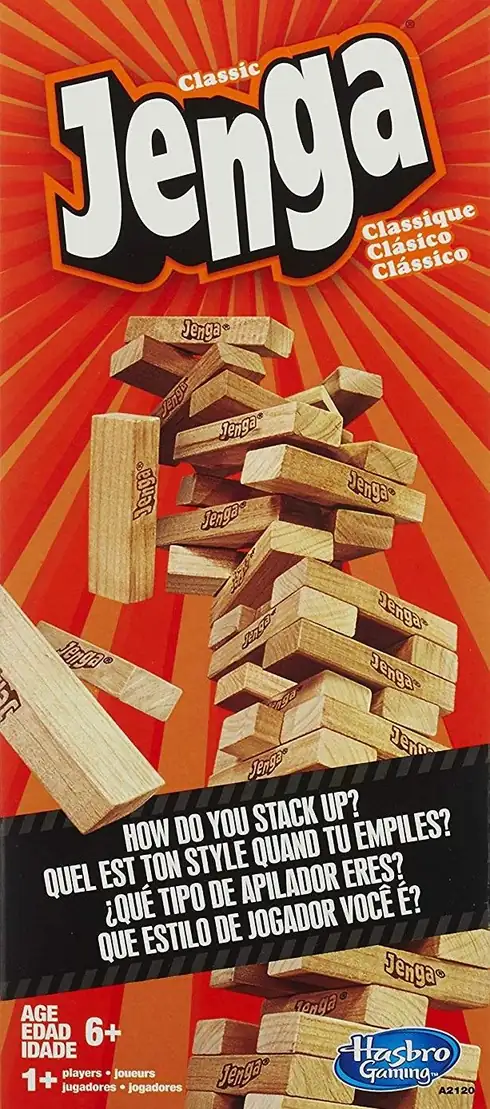
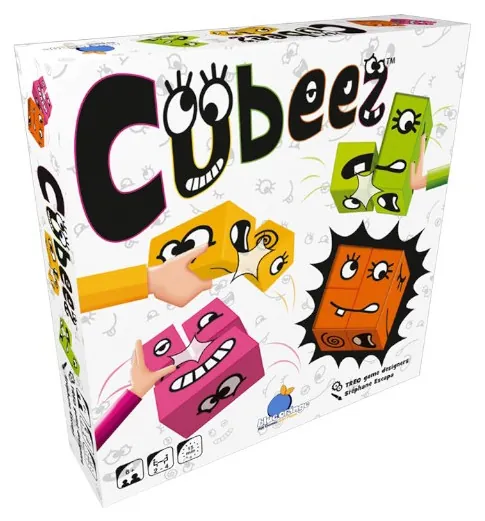
Jenga (from age 6, 1 or more people, about 15 to 20 minutes) shares fine motor skills with Bellz and also calls for impulse control. That means a steady hand, controlled force and letting go of a stuck block instead of impatiently pulling on. Jenga suits spontaneous games, and is less suited to children who are bothered by the loud collapse. Cubeez (from age 6, 2 to 4 people, about 15 minutes) has the same age and the same number of players as Bellz, and both cover fine motor skills. Cubeez also covers logic and planning as well as perception and speed, while Bellz covers impulse control. With Bellz (from age 6, 2 to 4 people, about 10 minutes), weighing risks comes in as well: keep fishing or secure the catch.
Sources
- RulesPal: Bellz! rules
- Reich der Spiele: review (in German)
- Angespielt.de: review (in German)
- Spieletest.at: review (in German)
- Spielecafé der Generationen: review (in German)
- Kinderzeit: review (in German)
- Sir Apfelot: game presentation (in German)
- spielen.de: Bellz (game database, in German)
- Galaxus: Bellz by Game Factory (offer, in German)
Frequently asked questions
What age is Bellz suitable for?
Bellz is recommended from age 6. A child is ready when they can move the wand steadily and cope with setbacks, because one bell of another color on the wand costs the whole catch. One children’s magazine only recommends it from age 8, because some of the bells are very small.
How long does a game take and how many people can play?
A game takes about 10 minutes. The game is for 2 to 4 people, who play against each other, each with their own bell color; the winner is the first to collect all ten of their bells.
What skills can Bellz help develop?
The skills profile lists fine motor skills and impulse control. The pull grows as the wand gets closer, so the hand needs to be steady and judge distances well. And with every catch, players have to decide whether to keep fishing or bank their winnings.
How easy is it to control the magnet?
The narrow end of the wand allows finer control because it pulls more weakly; the wide end picks up whole clusters at once. Some still find it difficult; one review recommends dry runs to get to know the two ends of the wand.