How it plays
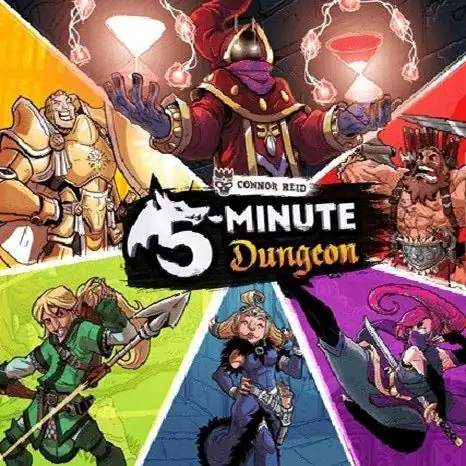
Each person plays a hero with their own deck and holds three to five cards in hand, depending on the number of players. The dungeon lies in the middle: monsters, obstacles, people and events, with the boss at the very bottom. A timer app counts down five minutes. There are no turns: everyone plays cards showing a sword, arrow, scroll, jump or shield at the same time until the symbols on the face-up card have been matched. Players immediately draw new cards. Hero abilities cost three cards from the hand. If the boss is defeated in time, a stronger one follows.
What it can help develop
The face-up card calls for two swords and a shield: who has what? Children compare symbols with their own hand at lightning speed and keep track of what is already in the middle: processing speed and divided attention. Because everyone acts at the same time, players constantly coordinate: “I have arrows!” Impulse control matters too: cards that have been played are lost, and anyone who plays cards at random in the rush will be short of them later.
Especially suitable for
- School-age children from age 8 who love speed and commotion
- Siblings who often argue when playing against each other
- Short breaks: a dungeon takes around five minutes
Less suitable for
- Children who quickly freeze under time pressure
- Beginner readers: action and event cards include text
Our verdict
The game 5-Minute Dungeon suits school-age children from age 8 and siblings who would rather take on a game together than play against each other. Its pace, its humor and ever stronger bosses make players want to play again; in 2018 it was on the Spiel des Jahres recommendation list. Its limitations are that anyone who freezes under time pressure or cannot yet read fluently will struggle to keep up, and that the course of the game depends heavily on the cards drawn.
Getting started
- Before you start, go through the five symbols: sword, arrow, scroll, jump and shield.
- Do not play cards at random in the rush: cards in the middle cannot be taken back and will be missing later.
- Use the hero ability deliberately: it costs three cards from your hand but can turn a game around.
In detail
Variants and player count
According to Kosmos, the Kosmos edition contains 250 cards, 5 player boards, 5 boss boards and a rulebook, but no timer. As a timer, the rules of the Italian edition by dV Giochi recommend the free timer app or a timer that can be paused. The same rules give 5 cards in hand with two players, 4 with three and 3 with four or five; according to Wikipedia, each hero deck has 40 cards. According to these rules, the game is lost when time runs out or when nobody has any cards left.
What reviewers say
According to Wikipedia, 5-Minute Dungeon was on the Spiel des Jahres recommendation list in 2018 and won the Österreichischer Spielepreis (Austrian games award) in 2018 in the “Spiele Hit mit Freunden” category. The Spiel des Jahres jury describes absurd dangers and the chaotic simultaneous playing of symbol cards. According to the jury, special abilities and action cards are tactical tools, and there are harder levels for experienced players. Brettspielblog.ch calls the Kosmos edition fast-paced and highlights that the bosses get stronger from dungeon to dungeon and that hero abilities turn some games around. According to Brettspielblog.ch, the short playing time encourages players to play again, and how a game goes depends on which cards players draw. A single player’s rating on ludovox.fr calls it short and dynamic and praises the humor of the illustrations and the character names.
How it compares
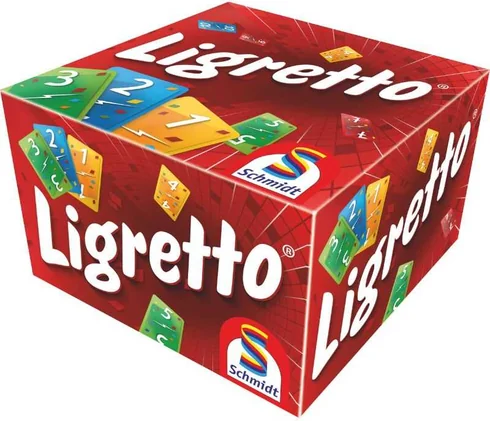
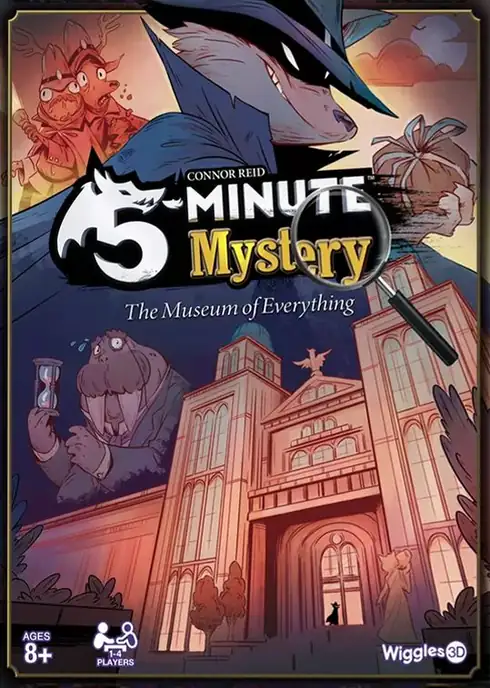
The game 5-Minute Mystery (from age 8, 1 to 6 people, about 5 to 30 minutes) shares the age and the playing time given with 5-Minute Dungeon. Both games cover perception and speed as well as cooperation, and both call for coordinating as a team. In 5-Minute Mystery, the focus is on visual searching and deductive reasoning; fans of detailed crime cases to puzzle over will find 5-Minute Mystery less suited to them. Ligretto (from age 8, 2 to 4 people, about 10 minutes), like 5-Minute Dungeon, calls for processing speed and divided attention, but has fine motor skills instead of cooperation in its skills profile. Children who freeze under time pressure are less well served by all three. The game 5-Minute Dungeon suits school-age children from age 8 who love speed and hustle and bustle, and siblings who often argue when playing against each other. It is less suited to beginning readers, because the action and event cards have text on them.
Sources
- dV Giochi: 5-Minute Dungeon rules, Italian edition (PDF, in Italian)
- Kosmos: 5-Minute Dungeon (product page)
- Wikipedia (German): 5-Minute Dungeon
- Spiel des Jahres: 5-Minute Dungeon (jury, in German)
- Wikipedia (German): Spiel des Jahres – Empfehlungsliste
- Wikipedia (German): Österreichischer Spielepreis, Preisträgerliste
- Brettspielblog.ch: review (in German)
- ludovox.fr: player’s rating (in French)
Frequently asked questions
What age is 5-Minute Dungeon suitable for?
The game 5-Minute Dungeon is recommended from age 8. A child is ready when they can read the text cards for actions and events confidently enough and experience time pressure as an incentive. Beginner readers and children who freeze when things get hectic need more patience.
How long does a game take and how many people can play?
A game takes about 5 to 30 minutes: a boss has to be defeated within five minutes, and then a stronger one awaits. The game is for 2 to 5 people, who play together, and everyone plays cards at the same time.
What skills can 5-Minute Dungeon help develop?
The skills profile lists perception and speed as well as cooperation. If the face-up card calls for a shield and two swords, children quickly check the cards in their hand and call out what they can contribute.
Do you need a timer?
Yes, but there is none in the box. The rules recommend the free timer app or a timer that can be paused; it counts down five minutes.