How it plays
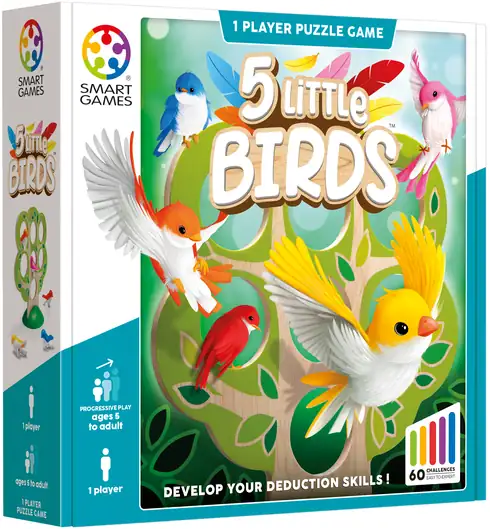
The game includes a wooden tree with seven holes, five birds with clips and a booklet of challenges with solutions (60 in the edition reviewed), ranging from easy to expert level. Each challenge shows sections of the tree: which bird sits above or next to which, which hole stays empty, who is facing forward, who has turned their back? Two holes always stay free. The task is to find the one arrangement of the clipped-on birds in which every clue is correct.
What it can help develop
The focus is on deductive reasoning: in difficult challenges, no single clue gives away the solution; only their combination does. Players practice ruling out possibilities: only the middle of the tree has three holes one above the other. Spatial reasoning is needed to transfer each section onto the tree. If a challenge mixes front and back views, nothing indicates which clue shows which view: seen from behind, left and right are reversed. Working through both readings calls for cognitive flexibility.
Especially suitable for
- Children from age 5 who enjoy puzzling things out on their own
- An introduction to logical deduction
- A quiet solo activity without a screen, for adults too
Less suitable for
- Children who only enjoy playing with others
- Children who still find aiming and clipping difficult
Our verdict
The game 5 Little Birds is a logic puzzle for one person. It is for children from age 5 who enjoy keeping themselves busy with puzzles on their own, and for adults who value quiet time without a screen. The booklet offers challenges of increasing difficulty, and in 2024 the game won gold at the Right Start Awards. Its limitations are that anyone who prefers playing with others or struggles with clipping the birds on gets less out of it.
Getting started
- Start with easy challenges; the solutions at the back of the booklet let you check every arrangement.
- Make clear beforehand that two holes always stay free and that the direction the birds are facing matters.
- With mixed views, try out both readings; only the solution shows whether a clue refers to the front or the back.
In detail
Variants and player count
In German-speaking countries the game is published as “Vogel-Versammlung”, and in French its title is “Sur un arbre posés”. The game includes a wooden tree, five birds with clips and a booklet of challenges with solutions; it is played alone. The box of the German edition gives the age as 5 to 99 and describes the challenges as ranging from easy to tricky. The tree has seven holes, two of which always stay empty. The clues show sometimes the front and sometimes the back of the tree, and which side is shown only becomes clear from the solution. According to the publisher, the game calls for flexible thinking, language, problem solving and spatial insight. According to smartgamesandpuzzles.com, getting started can be demanding for children who are new to logic games.
What reviewers say
In April 2024, the specialist blog AutismEnJeux noted that the clips are easy to open and sturdy, but that the last challenges are very hard. Children with motor difficulties first had to practice putting the birds in place, and the blog recommends starting by recreating the solution pictures. In 2024, the game won gold at the Right Start Awards in the Games and Puzzles category. In Belgium, it is on the 2024 list of winners of Toys & Games of the Year.
How it compares
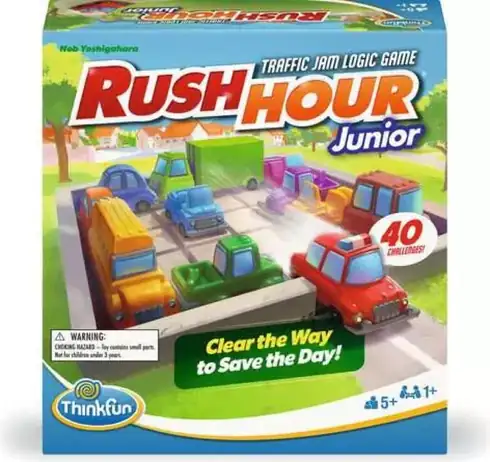
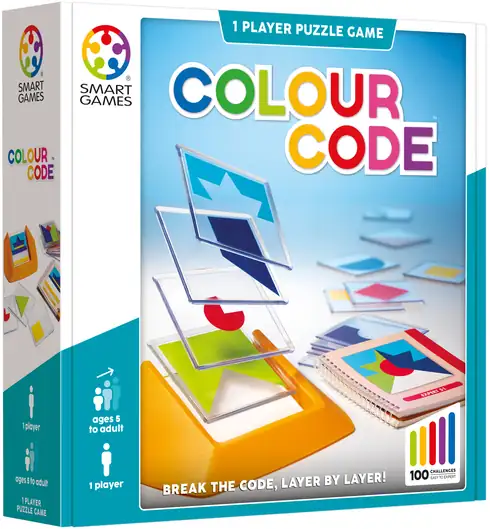
Color Code (from age 5, 1 person, flexible playing time) shares spatial thinking and logical deduction with 5 Little Birds. In Color Code, players work out from the picture which shape covers another and turn or flip the tiles; in 5 Little Birds, the focus is on deductive reasoning from clues. Rush Hour Jr. (from age 5, 1 person, flexible playing time) mainly calls for planning ahead and spatial reasoning. Rush Hour Jr. works as a first step toward the original Rush Hour and can be taken along when traveling. All three are purely solo games for children who enjoy puzzling things out on their own, and less suited to children who only like playing with others.
Sources
- SmartGames: Vogel-Versammlung (product page, in German)
- SmartGames: 5 Little Birds (product page)
- SmartGames: Sur un arbre posés (product page, in French)
- SmartGames: Vogel-Versammlung box (image, in German)
- Smart Games & Puzzles: 5 Little Birds
- AutismEnJeux (specialist blog, in French)
- Right Start Awards: product guide 2024
- Toys ’n’ Playthings: Right Start Awards 2024
- SmartGames: awards
- Toys & Games of the Year: winners (in Dutch)
Frequently asked questions
What age is 5 Little Birds suitable for?
The game 5 Little Birds is recommended from age 5 and, according to the box, its age range extends into adulthood. A child is ready when they can clip the birds on and enjoy solving puzzles clue by clue. For newcomers to logic games, getting started can be demanding.
How long does a game take and how many people can play?
The playing time is flexible, because each challenge is solved separately. The game is for 1 person, who plays alone; the solutions are at the back of the booklet, and each challenge has only one correct solution.
What skills can 5 Little Birds help develop?
The skills profile lists logic and planning: thinking ahead, solving problems, adapting strategies. In difficult challenges, only the interplay of several clues leads to the solution, and seen from the back, the arrangement appears mirror-reversed.
Are all the challenges manageable for children?
A specialist blog describes the last challenges as really hard; higher levels give only a few clues. Because the challenges range from easy to expert level, the difficulty can be increased in small steps.