How it plays
Everyone draws seven letter tiles and hides them on their rack. Taking turns, players place a word horizontally or vertically on the board, connected to words already played as in a crossword; the first word covers the square in the middle. Premium squares double or triple letter values or whole words. Using all seven tiles in one turn earns 50 bonus points. Instead of placing a word, players may exchange tiles. Once the bag is empty and someone has placed all their tiles, any tiles left over count as negative points; the highest score wins.
What it can help develop
Scrabble calls above all for word retrieval: seven random letters have to become a word, and anyone who knows a lot of words has an easier time. Children shuffle the tiles back and forth until a word appears. Working memory keeps several candidates ready, and words formed crosswise also have to be spelled correctly. Planning comes in too: is the move onto a premium square worth it if it opens the way to a triple word score for the opponent? Counting points involves mental math along the way.
Especially suitable for
- Children from age 8 who enjoy words
- Players with vocabularies of a similar size
- Calm puzzlers who like to think things through
Less suitable for
- Beginning readers: there is a junior edition
- Impatient players who dislike waiting
Our verdict
Scrabble is a worthwhile choice for children from age eight who enjoy playing with words, and for groups in which everyone knows a similar number of words. Its strength: a simple game principle that combines word retrieval and planning. Its limitations are the long games, arguments about the dictionary and the gap between large and small vocabularies.
Getting started
- For an easier start, try the house rule suggested in the rules: two letter bags, for example one for vowels and one for consonants.
- Have a sand timer ready so that long pauses for thought do not slow down the flow of play.
- Follow the strategy tip in the rules: do not give the opponent easy access to the triple word score squares.
In detail
Variants and player count
The German Mattel rules for Scrabble give 2 to 4 people, a board of 15 × 15 squares and seven tiles on each player’s rack, which the others may not see. As house rules, these rules suggest an open dictionary, which is useful for expanding vocabulary, and playing with two letter bags to make the game easier. Figures for the playing time differ by source and edition: the reviewer at Brettspiele-Report estimates 30 to 45 minutes, Spieletest.at and Luding give 60 and BoardGameGeek 90. According to the retailer Philibert, a junior edition from Mattel is intended from age 5 and has a double-sided board with two difficulty levels.
What reviewers say
Brettspiele-Report calls the game principle simple; according to the review, success depends above all on a player’s own vocabulary, and the fun is only guaranteed when vocabularies are of a similar size. Spieletest.at calls Scrabble a classic and probably the best choice in its genre; arguments about whether a word exists are part of it, according to the review. A reader’s comment there finds the game very long and advises shortening pauses for thought with a sand timer; the review by Spielphase of an older Spear edition also recommends a sand timer. Individual readers’ comments on Hall9000 find that the game can drag; without looking things up in the Duden, the standard German dictionary, it often remains unclear what is allowed, and the Q causes frustration. The National Toy Hall of Fame inducted Scrabble in 2004.
How it compares
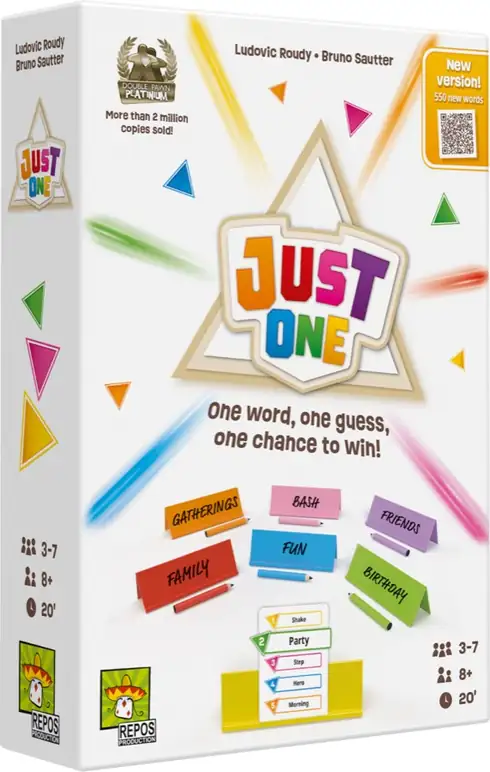
Bananagrams (from age 7, 1 to 8 people, about 15 minutes) shares with Scrabble the skill area of language as well as word retrieval, but also calls for processing speed and cognitive flexibility. Bananagrams suits families who find Scrabble too slow; Bananagrams is less suited to groups looking for interaction and strategy. Pass the Bomb (from age 12, 2 to 12 people, about 30 minutes) also relies on word retrieval, but as a loud party game that also calls for processing speed and impulse control. Scrabble, on the other hand, suits children from age 8 who enjoy words, calm puzzlers and groups with vocabularies of a similar size.
Sources
- Mattel: Scrabble Original rules (PDF, in German)
- BoardGameGeek: Scrabble
- National Toy Hall of Fame: Scrabble
- Brettspiele-Report: review (in German)
- spieletest.at: review (in German)
- Hall9000: readers’ comments (in German)
- Spielphase: review (older Spear edition, in German)
- Luding: Scrabble (in German)
- Philibert: Scrabble Junior (retailer, in French)
Frequently asked questions
What age is Scrabble suitable for?
Scrabble is recommended from age 8. A child who reads confidently, knows how words are spelled and stays patient during the others’ long pauses for thought is ready. For beginning readers, there is a junior edition.
How long does a game take and how many people can play?
A game takes about 50 to 90 minutes. The game is for 2 to 4 people, who play against each other. Reviews often find the games long and recommend a sand timer to deal with pauses for thought. The highest score wins.
What skills can Scrabble help develop?
Scrabble can help develop language as well as logic and planning. Anyone who forms a word from their seven tiles also has to spell the words it touches correctly. There is also the question of whether a move gives another player access to a triple word score square.
What if there is an argument about the dictionary?
Without looking words up, it often remains unclear what is allowed. The rules suggest an open dictionary as a house rule, which also expands players’ vocabulary along the way.