How it plays
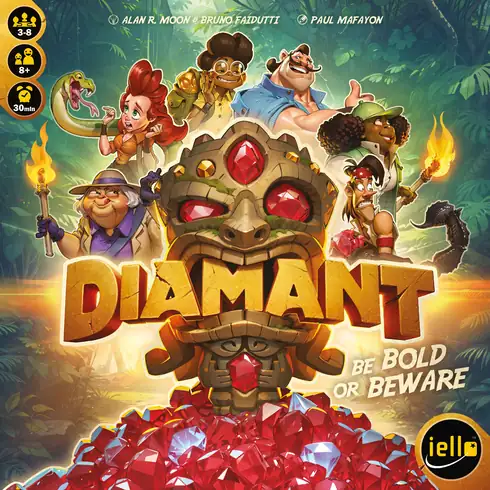
Five times, the group ventures into a cave, card by card. Treasure cards yield rubies, which are shared equally among everyone still inside; the remainder stays on the card. After each card, everyone chooses in secret: continue or turn back. Whoever turns back collects the rubies left lying on the path (several players share them) and secures everything in their chest. If the same hazard (there are five kinds) appears for a second time, everyone still inside loses their loot from that expedition. Whoever has the biggest treasure wins.
What it can help develop
Every card raises the same question: one more step, or secure the loot? Children have to assess the risk (which hazards are already showing, what is at stake?) and resist the next treasure card; this calls for impulse control. Because everyone decides at the same time, perspective-taking is needed: who is likely to turn back now? Anyone who turns back alone gets all the rubies left lying on the path.
Especially suitable for
- School-age children from age 8 who like to take a chance
- Family groups of up to eight people
- Practicing daring and knowing when to stop
Less suitable for
- Children who find it hard to cope with losing their loot
- Frequent players looking for depth of decision-making
Our verdict
Diamant is a worthwhile choice for family groups of up to eight people with children from age 8 who are willing to take risks. Its strength: a manageable set of rules, a lot of suspense and hardly any downtime, because decisions are made simultaneously; in 2005 it was on the Spiel des Jahres recommendation list. Its limitations are the narrow scope for decisions for frequent players and the frustration of losing loot.
Getting started
- Before starting, show the five kinds of hazard; there are three cards of each.
- Have everyone choose in secret whether to go on or get out, and reveal the choices at the same time, so that nobody waits to see what the others do first.
In detail
Variants and player count
According to IELLO (new edition 2024), Diamant was designed by Bruno Faidutti and Alan R. Moon and is intended for 3 to 8 people from age 8, with a playing time of about 30 minutes. According to Wikipedia, the first edition was published by Schmidt Spiele in 2005. According to the French IELLO rules, the game has 5 rounds; after each card, everyone decides at the same time and in secret whether to continue or leave. There are 5 kinds of hazard with 3 cards each; when the same hazard appears a second time, everyone in the cave loses the rubies from that expedition. In its review of the 2005 Schmidt edition, Reich der Spiele finds the minimum of three players set too low; according to Reich der Spiele, larger, relaxed groups are better. The designer Bruno Faidutti writes that with eight players it takes no longer than with three, because everyone decides at the same time.
What reviewers say
The Spiel des Jahres recommendation list for 2005 includes Diamant; according to Wikipedia, it received the Österreichischer Spielepreis (Austrian games award) in 2005 in the “Spiele Hit für Viele” category. For the Schmidt edition, Reich der Spiele praises simultaneous decisions that involve judging the other players and hardly any waiting; according to Reich der Spiele, it is not a strategic game to fill an evening. For the 2024 edition, Meeple Mountain praises the attractive presentation, but considers the scope for decisions rather small; according to Meeple Mountain, it works better with casual players than with frequent players.
How it compares
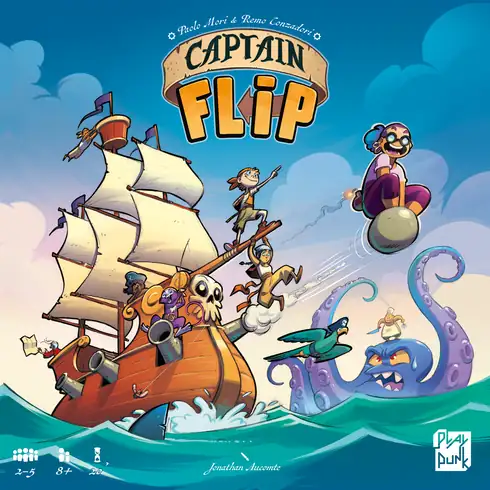
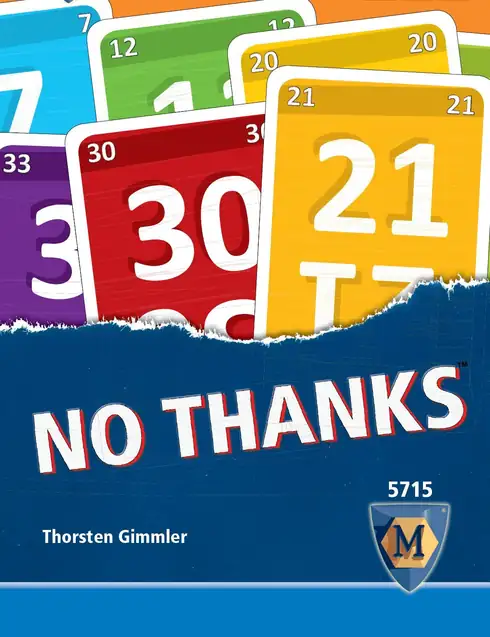
Captain Flip (from age 8, 2 to 5 people, about 20 minutes) shares the age, impulse control as well as logic and planning with Diamant; Diamant also has cooperation. Captain Flip suits families with children from age 8 and short games with an immediate rematch. No Thanks! (from age 8, 3 to 7 people, about 20 minutes) shares the age, impulse control as well as logic and planning with Diamant and has numbers and arithmetic instead of cooperation. Diamant suits school-age children from age 8 who like to take a risk, and family groups of up to eight people. Diamant is less suited to children who find it hard to cope with losing their loot and to frequent players looking for depth of decision-making.
Sources
- IELLO: Diamant, new edition (publisher’s page, in French)
- IELLO: Diamant (publisher’s page)
- IELLO: Diamant rules (PDF, in French)
- Wikipedia (German): Diamant (Spiel)
- Wikipedia (German): Spiel des Jahres – Empfehlungsliste
- Wikipedia (German): Österreichischer Spielepreis – Preisträgerliste
- Reich der Spiele: review (in German)
- Bruno Faidutti: Diamant (designer’s blog)
- Meeple Mountain: review
Frequently asked questions
What age is Diamant suitable for?
Diamant is recommended from age 8. A child is ready when they can assess risks, resist greedily reaching for the next treasure and cope with losing their loot. Children who find this hard are less well served here.
How long does a game take and how many people can play?
A game takes about 30 minutes. The game is for 3 to 8 people, who play against each other. The length hardly depends on the number of players, but in a larger group the game feels livelier than with three.
What skills can Diamant help develop?
It can help develop impulse control, logic and planning as well as cooperation. Every card raises the same question of whether to continue or secure the loot. On top of that, players have to estimate which hazards are already showing and who is likely to turn back now.
What happens if you lose your loot?
If a hazard appears a second time, everyone still on the expedition loses the loot from that expedition. Whatever is in the chest stays safe. Anyone whose mood is spoiled by the loss is less well served here.